
Evolving Marine Operations: Insights from Steel Knight 2025
Robbin Laird’s semi-regular analysis series draws upon over four decades of defense expertise, directing attention to pivotal defense issues. Recent defense exercises such as Steel Knight 2025 offer crucial lessons on strategic adaptability that are imperative for U.S. forces grappling with modern conflict dynamics.
Rethinking Force Deployment
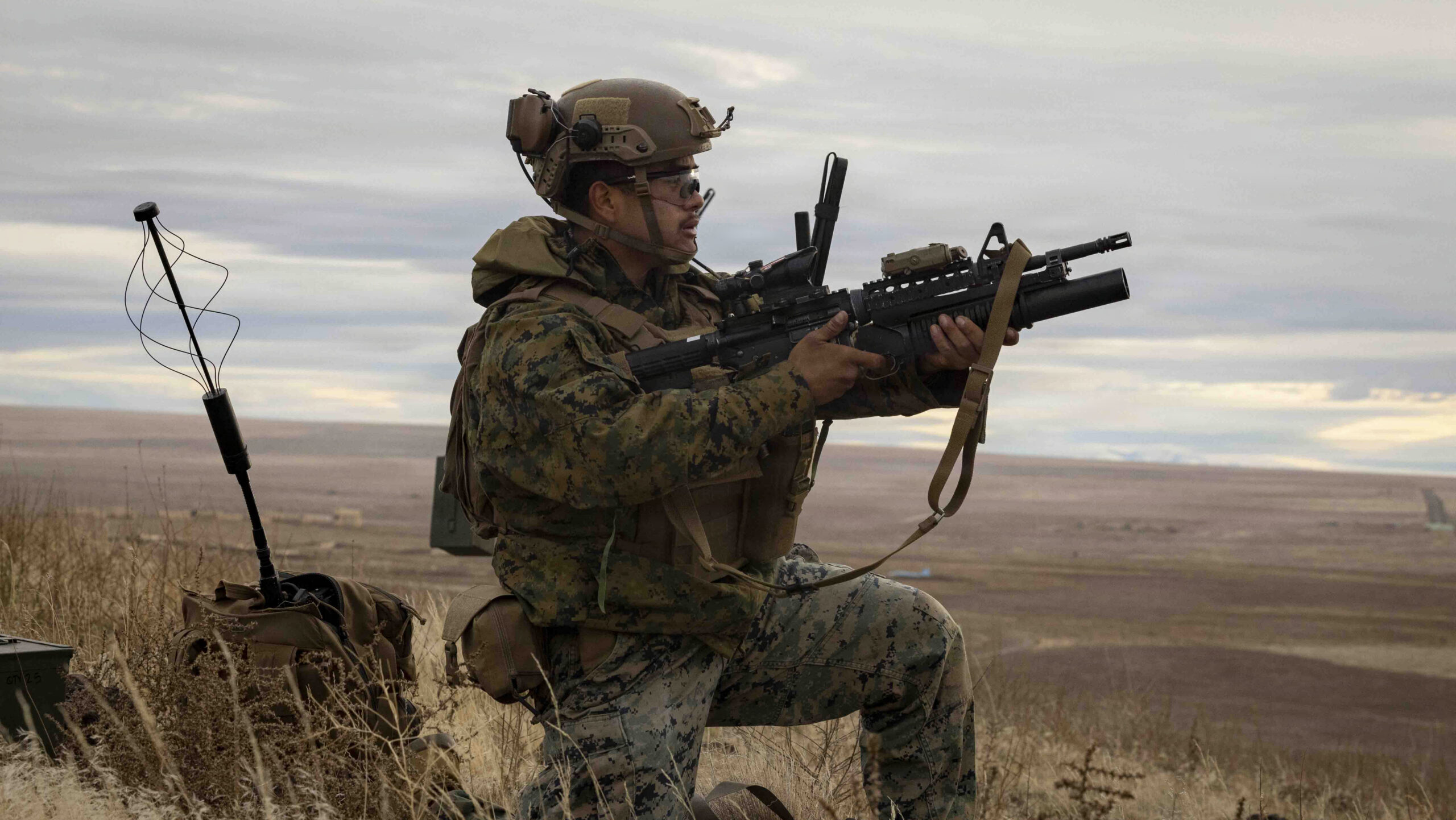
Steel Knight, conducted from December 1-14, 2025, alongside the 3rd Marine Wing and the I Marine Expeditionary Force (1 MEF), transcended traditional Marine Corps training. This exercise functioned as a real-time testbed for emerging concepts like stand-in forces, distributed operations, and kill webs, revolutionizing tactical assumptions.
Whereas previous training regimes hinged on assembling combat power at secure bases, Steel Knight deliberately focused on immediate, agile responses to crises, showcasing the feasibility of distributed operations under realistic conditions.
Key Takeaways:
- The exercise moved beyond Cold War-era linear buildup strategies, catalyzing a paradigm shift toward early engagement as a multi-site, interconnected force.
The S²D Framework
An innovative outcome of the exercise is the S²D framework, which encompasses Survivability, Sustainability, and Duration— critical components for modern force insertion.
- Survivability: Can the force endure in contested environments?
- Sustainability: What resources and logistics are available for prolonged operations?
- Duration: For how long can these units maintain operational effectiveness?
This paradigm marks a significant evolution from historical amphibious doctrines that relied on relatively secure logistics. Forces must now be engineered to function effectively under compromised conditions for extended durations, pushing the limits of traditional logistical assumptions.
Hub, Spoke, and Node Operations
Steel Knight underscored both advancements and challenges in executing hub, spoke, and node operations within distributed frameworks.
- Clarity about the roles and limitations of hubs, spokes, and nodes is vital. As emphasized by Robert Hedelund, the imperative exists to assign time constraints to nodes, necessitating constant movement rather than allowing for static deployment.
- Efficient movement, especially for forces conducting direct engagements, is essential to mitigate detection and targeting risks.
Despite the effective tactical execution, the adequacy of each node’s capabilities needs refinement. For instance, the Marine Corps must better leverage advanced technologies, such as the F-35, to ensure agility across distributed nodes.
Logistics: The Critical Enabler
Logistical capacities emerged as both an essential facilitator and a potential vulnerability.
- The integration of sophisticated systems like the CH-53K King Stallion and maritime autonomous solutions is crucial for enabling sustained distributed operations. Insights from exercise participants emphasized that the Marine Corps faces crucial shortfalls in platforms needed to operationalize these new structures independently.
- The significance of support assets such as Air Force C-130 aircraft illustrates the interconnectedness of operations and highlights existing capability gaps.
Adapting legacy platforms, like the V-22 Osprey, to fulfill their evolving roles enhances overall operational effectiveness. Originally designed for assault support, the Osprey’s adaptability underscores that transformation often requires reimagining how existing capabilities align with operational goals.
Delegating Decision Authority
The complexities inherent in distributed operations necessitate unprecedented levels of decision-making authority at lower echelons.
- Military units now possess advanced situational awareness and rapid response capabilities; however, outdated organizational structures hinder the maximization of these advances.
- Even the Air Force acknowledges the struggle between mission command principles and centralized control. Real-time engagements in contested environments may require decentralized command frameworks that prioritize agility and rapid adaptation.
Steel Knight engaged with low-signature communications tactics to foster quick decision cycles, yet clarity around authority distribution remains a challenge.
The Digital Shift in Interoperability
Digital interoperability has emerged as a transformative force in military aviation.
- The F-35’s capacity to act not only as a strike asset but also as a sensor and data node alters command paradigms significantly. The push toward seamless integration poses unique challenges, particularly in fielding various aircraft with distinct capabilities.
- Marine Light Attack Helicopter Squadron 267 (HMLA-267) exemplifies this revolution, showcasing how rotary-wing aircraft are evolving into critical network nodes within distributed operations.
Proactively managing diverse communication pathways enhances resilience in contested environments, reinforcing the need for redundancy as a survival mechanism.
Adapting to Fast-Paced Conflict
The ongoing situation in Ukraine serves as a stark reminder of the necessity for rapid adaptation in modern warfare.
- Ukrainian forces quickly integrated commercial technologies and innovative techniques, outpacing adversarial responses. This highlights a crucial element: the capacity for quick learning and integrated solutions can be a decisive advantage.
- The potential for adversaries worldwide to similarly adapt emphasizes that command structures must remain fluid and responsive to unforeseen circumstances.
Bridging the Gap from Exercises to Real-World Integration
Observations from Steel Knight 2025 emphasize that while the Marine Corps is progressing towards operationalizing distributed concepts, significant gaps remain that require immediate attention.
Areas for Improvement:
- Refining Command Structures: Adapt command relationships to suit the tempo and flexibility required by distributed operations.
- Enhancing Logistics: Invest in additional platforms and innovative logistics approaches to bolster operational capabilities.
- Clarifying Strategic Guidance: Define clear objectives for the deployment of distributed forces within larger campaign strategies.
In this era of rapid technological evolution and shifting operational paradigms, the Marine Corps requires sustained commitment to an adaptive organizational culture capable of evolving faster than adversaries. The foundation laid by Steel Knight 2025 offers vital lessons for future military operations, pushing the boundaries of what’s possible and reaffirming the adaptability and resilience of the U.S. Marine Corps.