
Austal Defence to Construct Eight Landing Craft Heavy for Australian Military
Overview of the Contract
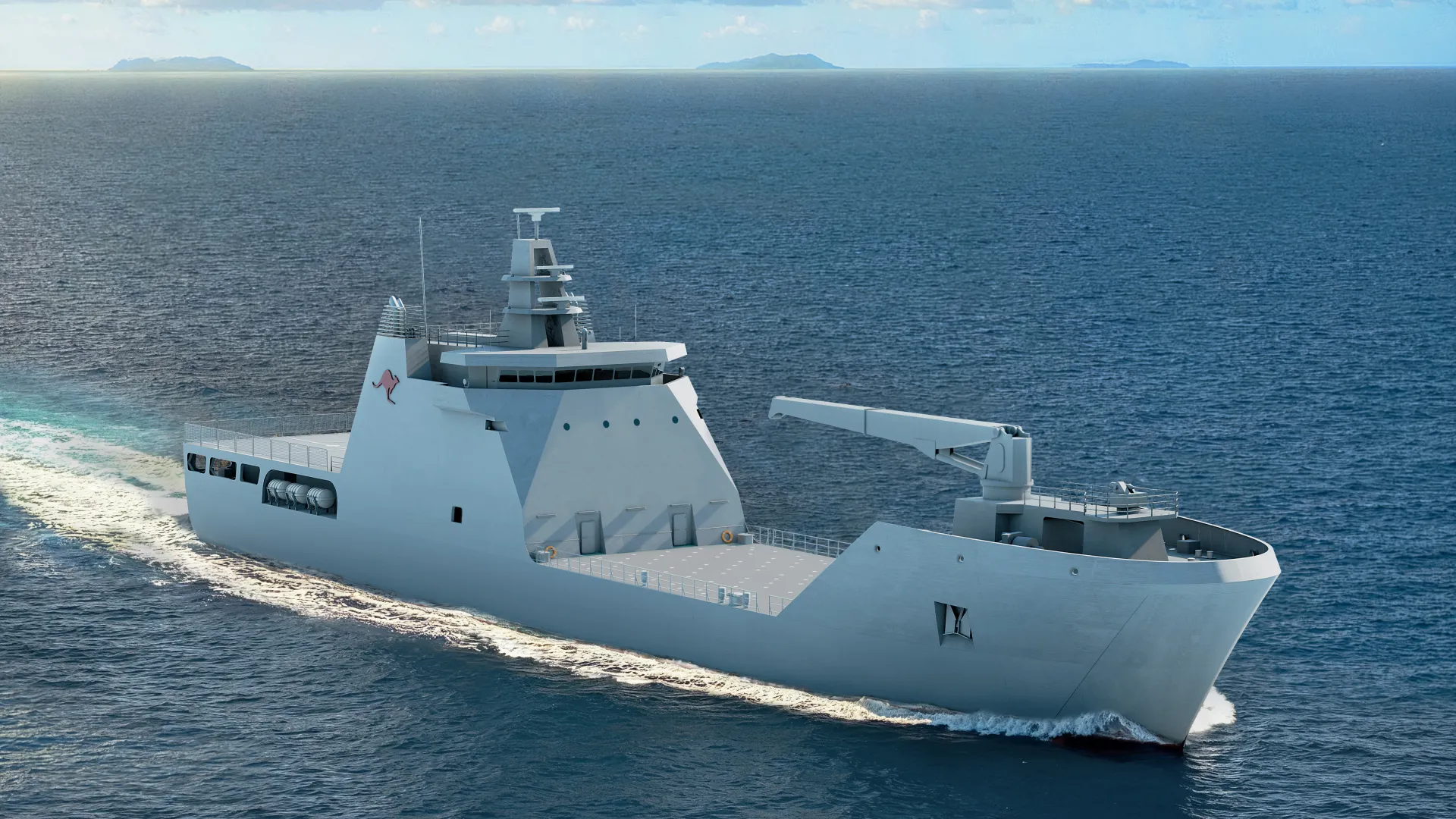
Austal Defence Australia has been awarded a substantial contract valued at approximately AUD 4 billion (USD 2.82 billion) to produce eight Landing Craft Heavy (LCH) vessels intended for the Australian Defence Force. This announcement underscores Australia’s commitment to enhancing its naval capabilities within the domestic shipbuilding sector.
Specifications and Construction Details
The LCH vessels, measuring 100 meters (328 feet), will be developed based on the Damen LST100 design and constructed at the Common User Facility located in Henderson, Western Australia. Production is set to initiate later this year. Notably, while the contract does not specify the delivery timeline for the first unit, the completion of the project—including the final vessel—is anticipated by 2038.
Key Features of the Vessels:
- Payload Capacity: Each LCH will support a payload of up to 500 tonnes.
- Troop Transport: Capable of accommodating 200 soldiers.
- Armored Vehicle Capacity: Designed to carry six M1 Abrams tanks or nine Redback infantry fighting vehicles.
Implications for Australian Defence Strategy
According to the Department of Defence, these new amphibious vessels will significantly augment Australia’s operational capabilities in both military engagements and humanitarian missions. The enhancement of amphibious capabilities is crucial as the Australian military shifts its focus to multi-domain operations, aligning with contemporary global defense strategies.
Previous Contracts and Future Prospects
This latest award is part of Australia’s Project Land 8710 Phase 2, following Austal’s earlier selection for medium landing craft under Phase 1 of the same initiative. The existing contract, coupled with the upcoming projects, places Austal at the core of Australia’s defense industrial framework.
Strategic Importance of Henderson Defence Precinct:
- Facility Upgrades: The Henderson site will not only host the construction of the LCHs but also the eight Mogami-class frigates for the Royal Australian Navy.
- Nuclear Submarine Support: It will provide essential docking facilities for future nuclear-powered submarines, reinforcing Australia’s long-term maritime strategy.
Strategic Shipbuilding Agreement
In August 2025, Austal entered into a strategic shipbuilding agreement with the Australian government, aimed at establishing a continuous pipeline of naval projects focused on design, construction, and integration. This initiative intends to streamline operations and increase efficiency across naval shipbuilding efforts.
Minister for Defence Industry Pat Conroy emphasized that while Austal has secured the LCH contract, they must continue demonstrating value and efficiency to remain competitive for future projects, including the construction of the Mogami-class frigates. Success in the current landing craft programs will be indicative of their capability to fulfill larger contracts.
Conclusion: Navigating Future Challenges
Australia’s investment in domestic shipbuilding, particularly through contracts such as the one awarded to Austal, reflects a broader strategy aimed at self-reliance and enhanced operational readiness. As the geopolitical landscape evolves, the demand for advanced maritime assets will only increase, making the role of companies like Austal pivotal in reinforcing national defense.
This initiative is not just a significant economic opportunity for the Australian shipbuilding industry, but a critical component of a comprehensive defense strategy that seeks to position Australia proactively in an increasingly complex security environment.