

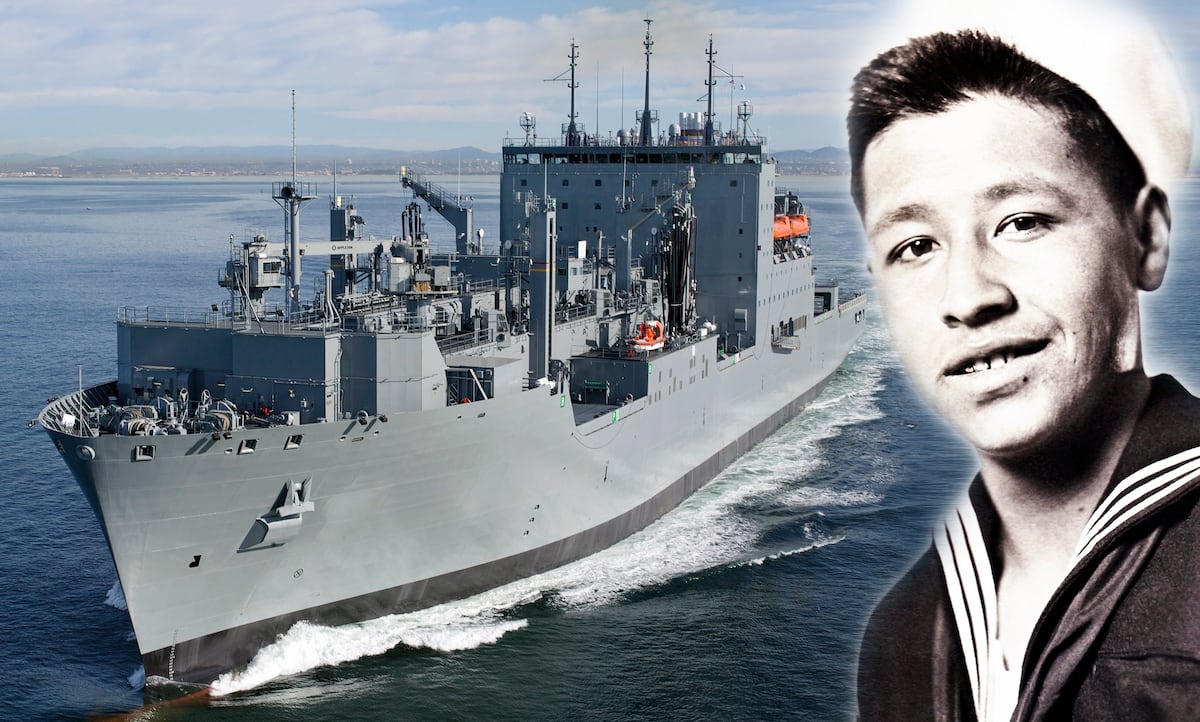
U.S. Navy’s Decision on Ship Naming Reflects Political Dynamics
Retaining the Legacy of Cesar Chavez
In a recent memorandum issued by Navy Secretary John Phelan, the U.S. Navy has declared its intention to retain the name of the Lewis and Clark-class dry cargo ship, USNS Cesar Chavez. This decision comes in the wake of expressions of concern from lawmakers regarding the potential renaming of this vessel, which honors a prominent American civil rights leader and Navy veteran.
Congressional Advocacy
The memorandum, dated August 1, was a response to a letter from Representative Sam Liccardo (D-Calif.) and co-signed by Representative Gil Cisneros (D-Calif.) along with 22 additional congressional colleagues. The message conveyed by these lawmakers emphasized that altering the vessel’s name would result in unnecessary expenditures and contribute to the unwarranted politicization of the Defense Department.
- Liccardo’s Statement: “Naming a ship after Cesar Chavez signifies that service to our nation transcends military engagement; it embodies a continuous struggle for justice.”
- Concerns of Dishonor: The representatives underscored that renaming the ship would diminish Chavez’s legacy in social justice and his commitment to service.
Navy’s Strategic Naming Policy
The memorandum clarified that future vessel names will align with the administration’s priorities, U.S. history, and the marine service ethos. Phelan articulated the Navy’s commitment to uphold these principles in response to the representatives’ inquiry.
Despite this assurance, Liccardo expressed apprehension regarding the criteria applied across different namesakes. He expressed the need for a return correspondence from Defense Secretary Pete Hegseth to discuss why Harvey Milk, another iconic figure associated with justice and rights, would not be honored under the same rationale.
Key Points
- USNS Cesar Chavez: Launched on May 5, 2012, the vessel currently operates within the U.S. Pacific Fleet.
- Cesar Chavez’s Contributions: A Navy veteran from 1946 to 1948, Chavez was instrumental in advocating for the rights of farmworkers and co-founded the United Farm Workers Union.
Comparisons with Harvey Milk Naming Controversy
In a notable contrast, Secretary Hegseth recently announced the renaming of a fleet replenishment oiler that had borne the name of Harvey Milk, a renowned LGBTQ rights advocate and Navy veteran. The new designation for the vessel is Oscar V. Peterson.
- Political Critique: In a public statement, Hegseth criticized the Biden administration for what he termed “political activism” regarding ship names, stating, “We are taking the politics out of ship naming.”
Liccardo’s observations highlight an ongoing discourse around the implications of military naming conventions and their broader social and political resonance.
Summary
The decision to maintain the name of USNS Cesar Chavez not only reflects a specific commitment to a figure of historical significance but also illustrates a complex interplay of political considerations within military leadership. As ship naming continues to evoke strong sentiments within various communities, the Navy will likely face increasing scrutiny regarding its naming policies and their alignment with contemporary values.