
Strategic Military Maneuvers in the Middle East: Analyzing Recent Developments
Introduction: A Show of Force
In a bold display of military prowess, President Donald Trump has ordered the deployment of the USS Gerald R. Ford, the world’s largest aircraft carrier, to the Middle East amid ongoing diplomatic engagements with Iran surrounding its nuclear program. This move serves to reinforce U.S. commitments in the region while simultaneously applying pressure on Tehran to reach a satisfactory nuclear agreement. The President has signaled that failure to negotiate could lead to a military response that would surpass last year’s Operation Midnight Hammer.
Decision Point: The Next Steps
During a recent Board of Peace meeting, Trump indicated he would make a decisive move regarding a potential strike on Iran within the next ten days. His remarks suggested a dual approach:
- Potential for Negotiation: Acknowledging the possibility of a diplomatic resolution.
- Military Readiness: Indicating preparedness for a more vigorous military action if negotiations falter.
The tone reflects a strategy that blends coercive diplomacy with readiness for kinetic engagement, a hallmark of contemporary U.S. foreign policy.
Naval Power as a Deterrent
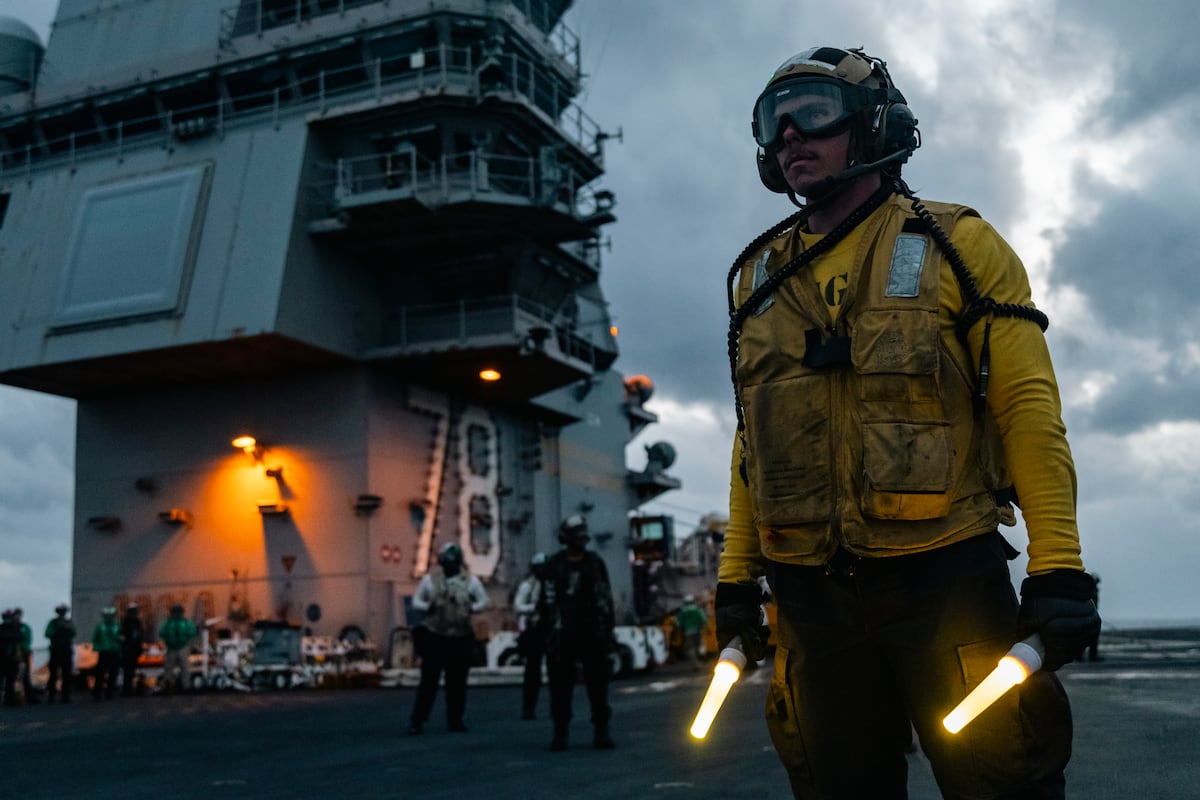
The USS Gerald R. Ford represents a cornerstone of U.S. naval capabilities, joining a formidable coalition of warships, including the USS Abraham Lincoln, within U.S. Central Command’s operational theater. This strategic positioning is indicative of a calculated effort to reinforce deterrence against Iranian provocations.
Key Insights:
- Operational Flexibility: The Ford’s capabilities enable it to execute up to 120 sorties per day, positioning it as a vital asset in any potential military engagement.
- Psychological Impact: Military analysts suggest that the visible presence of U.S. naval power serves to enhance the deterrent effect on adversaries while offering leverage in negotiations.
Retired Vice Admiral Kevin Donegan articulated that such military deployments are specifically intended to persuade Iran towards a negotiated settlement, all while signaling that America retains the option of force should diplomacy collapse.
Iran’s Response: Escalating Rhetoric
In a counter to U.S. deterrence efforts, Iran’s Supreme Leader Ali Khamenei issued stern warnings, asserting that Iranian military capabilities could decisively neutralize U.S. naval assets. Khamenei emphasized that while American warships pose a danger, Iran possesses the means to eliminate such threats. This rhetoric underscores the high-stakes environment in which both nations are operating, as Iran aims to project strength as talks progress.
Contextual Analysis:
- Negotiation Leverage: Iran’s response aligns with the strategic necessity to maintain an image of resilience, particularly as indirect negotiations continue.
- U.S. Military History: Historically, American military power has demonstrated effectiveness against Iranian forces, reinforcing Donegan’s assertion regarding the credibility of U.S. military capabilities.
Operational Challenges: Extending Carrier Missions
However, the deployment of the USS Gerald R. Ford is not without complications. Admiral Daryl Caudle, Chief of Naval Operations, has expressed reservations about extending the carrier’s mission as it nears the eight-month mark at sea.
- Human Factor: The extensive duration and operational demands raise concerns about crew fatigue and maintenance issues.
- Strategic Considerations: While the Ford provides critical options for military operations, decision-makers must weigh the pros and cons of extending its deployment.
Strategic Air Power: Reinforcing Military Posture
Open-source intelligence indicates that the Pentagon is augmenting its military footprint in the region through additional air assets.
- Composition of Forces: A range of aircraft, including F-16s, F-22s, and F-35s, is being positioned within striking distance of Iran.
- Support Systems: The repositioning of refueling tankers and EA-18G Growlers adds depth to the operational capabilities available for sustained aerial campaigns.
Analysts suggest that submarines may also be integrated into the operations, enhancing the stealth and surprise elements of U.S. military strategy.
Diplomatic Tensions: Ongoing Negotiations
As military activities escalate, indirect negotiations between U.S. and Iranian officials continue to evolve, demonstrating some progress. Notably, recent discussions in Geneva yielded a consensus on certain guiding principles; however, significant gaps remain. The White House has characterized the outcomes as modest, underscoring the complexities involved in reaching a comprehensive agreement.
Future Outlook
Secretary of Defense Pete Hegseth reiterated that the military remains prepared to enact any directives from the President should Iran reject a nuclear deal, emphasizing that military force remains an option if rational negotiations prove futile.
Conclusion: A Balanced Approache
In this charged environment, the U.S. aims to strike a balance between military readiness and diplomatic engagement. The ongoing developments in the region serve as a critical case study in modern defense policy, encapsulating the diverse challenges of deterrence, diplomacy, and strategic military presence.
Tanya Noury, a seasoned reporter covering defense, emphasizes the nuanced decisions facing U.S. leadership as they navigate the complex geopolitical terrain of the Middle East.