

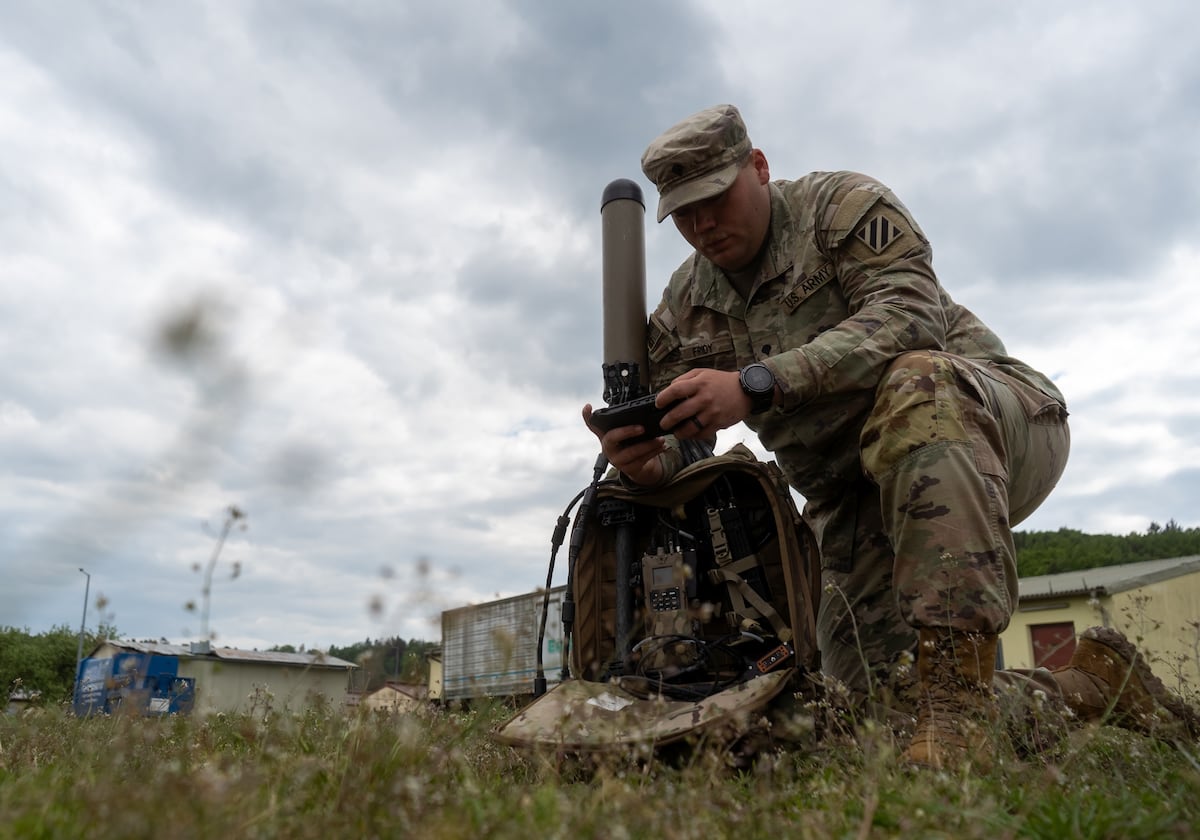
Transformation of U.S. Army Acquisition in Electromagnetic Warfare
The U.S. Army is currently undergoing a significant reorganization of its acquisition framework, particularly in the domains of electronic warfare (EW) and signals intelligence (SIGINT). This strategic pivot, led by Gen. David Hodne, Commander of the Army’s Transformation and Training Command, highlights key deficiencies in the Army’s ability to operate within the electromagnetic spectrum.
Challenges in Current Capabilities
Gen. Hodne’s assessment reveals that the Army is hindered by an inadequate capacity to sense, locate, engage, and protect against threats across various segments of the electromagnetic spectrum. The existing acquisition system for electromagnetic spectrum operations (EMSO) is characterized by fragmentation, which complicates coherence in technological deployment.
Issues Identified:
- Fragmentation of EMSO Capabilities: Current systems are distributed across diverse warfighting functions without a unified design framework. This lack of cohesion limits technological modularity and scalability.
- Inadequate Utilization of AI/ML: The Army’s inability to fully harness Artificial Intelligence and Machine Learning impedes rapid decision-making and the exploitation of strategic opportunities in competitive environments.
Industry Engagement for Innovation
To address these shortcomings, the Army is actively seeking industry feedback on its new EMSO acquisition concept. A Request for Information (RFI) has been issued regarding the potential for an Indefinite Delivery/Indefinite Quantity (IDIQ) contract aimed at streamlining the procurement of EW and SIGINT technologies. Responses are expected by March 13.
Key Questions Posed to Industry:
- Investment Willingness: Would industry stakeholders be prepared to invest in faster delivery solutions if the government were to implement multi-year procurement contracts?
- Customization Needs: The Army acknowledges that a standardized basis of issue (BOI) across various formations—such as heavy, light, and airborne units—is not cost-effective or optimal for enhancing battlefield effectiveness against technologically advanced adversaries.
Fostering Meaningful Partnerships
The Army expresses a keen interest in establishing effective partnerships with industry to facilitate the rapid development and deployment of EMSO capabilities. The solicitation in the RFI directly questions potential partnership models that could enhance the speed and efficiency of capability fielding.
In Gen. Hodne’s vision, a collaborative effort with program managers and the Command and Control/Counter C2 Portfolio Acquisition Executive is essential for streamlining the introduction of new systems.
Objectives for Collaborative Initiatives:
- Continuous Integration: Ensure seamless integration and ongoing delivery of EMSO capabilities, particularly in austere and denied environments.
- Diverse Operational Capabilities: Development of both offensive and defensive sensor systems capable of:
- Targeting specific communication protocols.
- Identifying and locating multiple enemy emitters simultaneously.
- Obscuring friendly electromagnetic signatures to enhance operational security.
Future-Proofing EMSO Systems
The Army is advocating for EW and SIGINT systems that incorporate open architecture, allowing for compatibility with the Next-Generation Command-and-Control framework. This move is crucial for evolving alongside contemporary threats while ensuring interoperability across various military domains.
Innovative Features Required:
- Flexible Design: Systems should be modular and adaptable to meet diverse battlefield conditions.
- Advanced Threat Mitigation: Emphasis on capabilities that can effectively counter modern adversaries through superior situational awareness and operational readiness.
In summary, the U.S. Army’s reorganization of its acquisition process for electronic warfare and signals intelligence systems reflects a proactive response to emerging challenges within the electromagnetic domain. Engaging with industry and fostering innovative partnerships will be pivotal in enhancing the Army’s operational effectiveness and readiness in a rapidly evolving security landscape.