Transitioning from Turboprop ISR to Business Jets: The U.S. Army’s HADES Program
The U.S. Army is initiating a significant shift in its Intelligence, Surveillance, and Reconnaissance (ISR) capabilities, transitioning from a reliance on turboprop aircraft to the procurement of business jets. This evolution underscores the Army’s commitment to enhancing its operational effectiveness in a rapidly changing aerial threat landscape.
Introduction of the Bombardier Global 6500
Under the auspices of the High Accuracy Detection and Exploitation System (HADES) program, the Army plans to acquire up to 11 customized Bombardier Global 6500 aircraft. This new fleet is intended to replace the aging ISR turboprop platform, signaling a strategic pivot towards more advanced aviation technology.
- Delivery Timeline: The Army’s Request for Information (RFI) indicates contractors must be prepared to deliver up to four aircraft annually following a contract award anticipated in October 2026.
Key Performance Specifications
The RFI delineates stringent performance criteria for the Global 6500, which is expected to operate at altitudes between 41,000 and 51,000 feet—a range conducive to extensive ISR missions. Specific requirements include:
- Payload Capacity: Minimum payload of 14,000 pounds.
- Endurance: Capability to sustain flight for at least 12 hours.
- Speed: Sustained speed of 450 knots at maximum altitude.
- Self-Deployment Range: A self-deployment capability covering up to 6,000 nautical miles.
Structural Considerations and Modifications
The Army has outlined a few structural requirements, notably the exclusion of composite materials in the aircraft’s fuselage and structural components, save for specific areas like the nose and tail cones. This decision likely stems from considerations regarding aerial durability and vulnerability. Additionally, contractors are required to secure Federal Aviation Administration (FAA) certification for any modifications, aiming to integrate advanced ISR capabilities into the aircraft.
Power and Cooling Requirements
Given the projected installation of numerous power-intensive ISR systems aboard HADES aircraft, the Army has placed significant emphasis on ensuring adequate power supplies. Contractors must demonstrate:
- Excess Capacity: Specifications on size, weight, power, and cooling solutions applicable to mission equipment.
- Mission Power Distribution: Detailed information on the distribution systems for all mission-related power needs.
Moreover, proposals should include whether a flight simulator will be part of the offering, as well as an assessment of estimated operational costs per flying hour, which is essential for budget forecasting and resource allocation.
Strategic Retirement of Legacy Aircraft
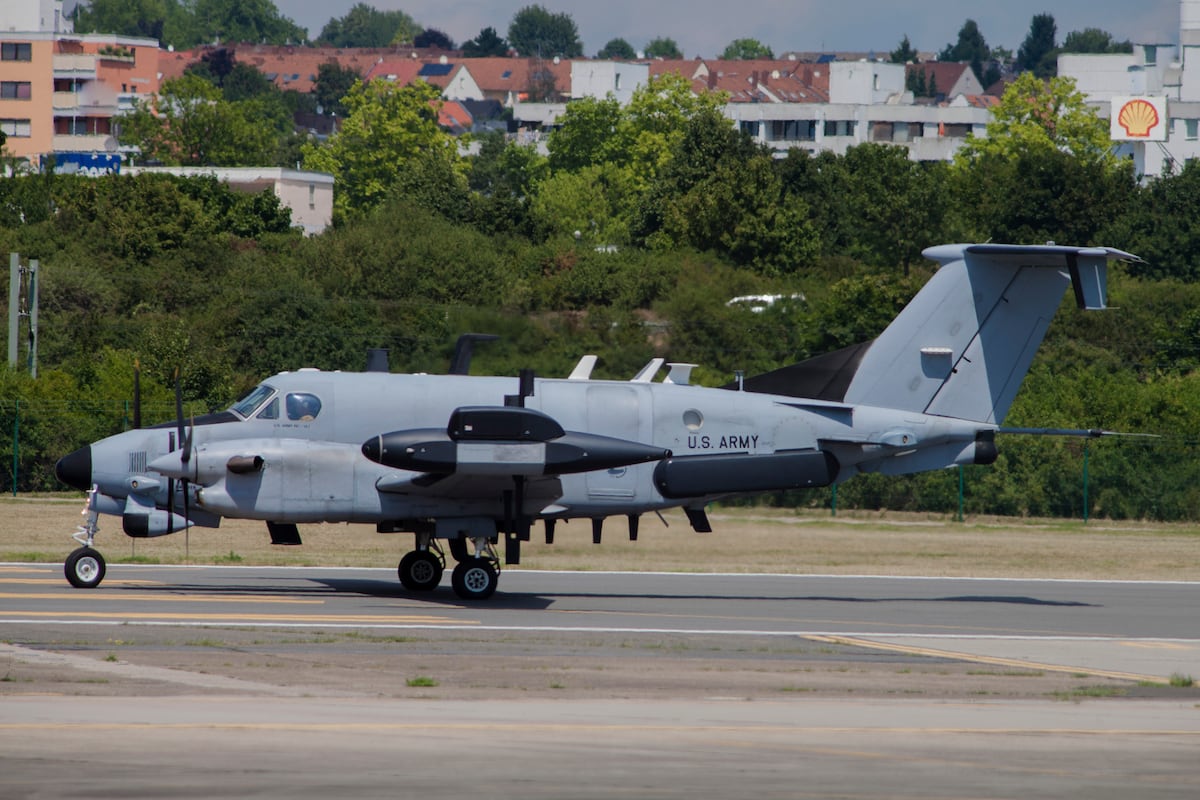
The HADES initiative coincides with the U.S. Army’s decision to retire its fleet of approximately 60 turboprop ISR aircraft, including the RC-12X Guardrail and the MC-12 Enhanced Medium Altitude Reconnaissance and Surveillance System (EMARSS). These aircraft, while historically significant, are increasingly ill-suited for contemporary battlefield requirements.
- Historical Context: The RC-12 Guardrail was first introduced in 1971 to monitor Soviet troop movements during the Cold War, while EMARSS, deployed in 2016, had become integral in modern ISR missions.
As the Army moves towards a model that prioritizes speed, range, and altitude—essential for operations against peer adversaries— the limitations of the older turboprop fleet become more pronounced.
Bridging the Gap with Modernized Platforms
In response to the immediate gap left by retiring legacy aircraft and before the HADES program becomes operational, the Army is actively utilizing the Bombardier Challenger 650 business jets through initiatives like the Aerial Reconnaissance and Targeting Exploitation Multi-Mission Intelligence System (ARTEMIS) and Airborne Reconnaissance and Electronic Warfare Systems (ARES).
To maintain seamless ISR capabilities until the introduction of HADES, the Army will employ the Global 6500 aircraft through the Army Theater-Level High Altitude Expeditionary Next-AISR (ATHENA) program, ensuring continuity in operational support and intelligence gathering.
Conclusion
The transition to the Bombardier Global 6500 for the HADES program exemplifies the U.S. Army’s strategic response to the evolving security environment, marked by increased aerial threats and the necessity for advanced ISR capabilities. By investing in more capable and versatile platforms, the Army is setting the stage for enhanced situational awareness and operational agility in future military engagements. This shift not only represents a modernization of equipment but also reflects a broader understanding of contemporary warfare that prioritizes intelligence and rapid response capabilities.