
The Transformation of Ukraine’s Military Strategy: Embracing Unmanned Warfare
Historical Context
Four years post the initial clash with Russia, Ukraine’s military structure has undergone a dramatic metamorphosis. The forces that once valiantly defended Kyiv against Russia’s offensive are now fundamentally altered, primarily due to the unparalleled scale of the conflict. Ukraine confronts a well-armed nuclear power in the most extensive land warfare in Europe since World War II, necessitating innovative strategies to counterbalance a significantly larger opponent.
Current Manpower Challenges
Reports indicate alarming deficits in personnel strength:
- Operational Readiness: Many frontline units operate at merely 50-60% of their authorized manpower, with some reports indicating numbers as low as 30%.
- Average Age of Soldiers: The typical age of frontline troops has risen to 43-45 years, underlining the urgency for rejuvenation in ranks.
- Deserters and Evasion Rates: Approximately 200,000 troops are absent without leave, with Defense Minister Mykhailo Fedorov revealing around 2 million citizens actively evading mobilization.
Such statistics expose the crippling impact of human resource attrition on Ukraine’s military capability, pushing commanders to increasingly rely on technological solutions.
The Rise of Autonomous Systems
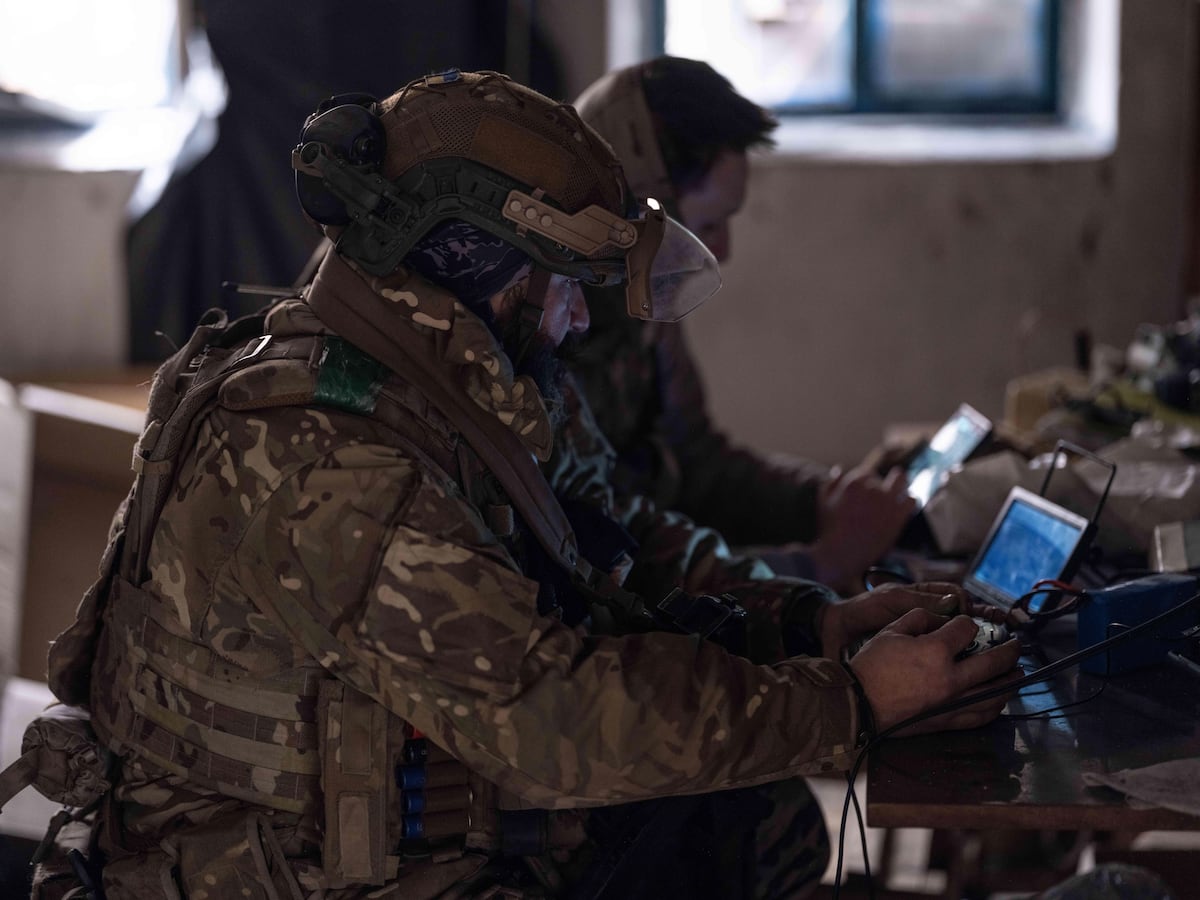
Faced with diminishing troop numbers, Ukraine’s military has transitioned from merely supplementing its forces with advanced technologies to incorporating them as core components of its operational framework.
- Shift Toward Unmanned Platforms: Drones and armed ground robots are not just auxiliary assets; they are now pivotal in frontline engagements, replacing traditional infantry in certain roles. Reports show that drones accounted for 69% of strikes against Russian personnel and 75% against vehicles and equipment in 2024.
- Operational Adaptations: A notable example is the 28th Brigade’s Unmanned Systems Battalion, which has successfully shifted 70% of its logistical operations to automated platforms. The integration of unmanned aerial vehicles (UAVs) enhances not only combat effectiveness but also the efficiency of supply chains.
Tactical Innovations
Ukraine’s adoption of unmanned systems epitomizes a strategic pivot in military doctrine, impacting how battles are fought and won. The army now employs advanced warfare strategies that blur the lines between manned and unmanned combat operations.
- Kill Ratios: Some units, like Lazar’s Group, have reported their strike drones executing 60-70% of the hits in their operational sectors, demonstrating a significant redirection of battlefield dynamics.
- Unconventional Operations: Specific battalions are executing missions solely through drone capabilities, minimizing the need for ground personnel in combat situations. For instance, in some sectors, small teams are employing UAVs to maintain a defensive perimeter purely through surveillance, artillery coordination, and mine deployment.
Challenges of Integration
Despite the clear advantages of unmanned systems, the transition is not without its difficulties:
- Equipment Vulnerabilities: Continuous harsh winter conditions have affected battery performance, resulting in operational disruptions. Ukrainian units have resorted to improvisations for ensuring that their drones remain functional during extreme weather.
- Russia’s Countermeasures: In parallel, Russian forces are ramping up their electronic warfare efforts, aiming to disrupt Ukrainian drone operations, thus creating a challenging environment for aerial autonomy.
Strategic Implications
The ongoing conflict illustrates a fundamental shift in military expectations. The reliance on unmanned systems reflects broader global trends, where technological supremacy increasingly dictates operational success. Various commanders have expressed a belief that new warfare paradigms could redefine future conflict.
- Training and Workforce Development: New units like the international UAV-focused battalions are changing recruitment standards, prioritizing skills in technology over traditional combat proficiency. This may foreshadow a long-lasting reevaluation of military training methodologies globally.
- Redefinition of Combat Roles: As one operator put it succinctly, “Infantry is dead,” highlighting how the integration of technology reshapes not only tactics but also the very nature of military engagement.
Looking Ahead
While integrating unmanned systems is a strategic imperative for Ukraine, concerns linger about the complete replacement of human warriors. As tensions evolve, so too must military doctrine and strategy, recognizing that while drones substantially augment capabilities, they cannot wholly supplant human resourcefulness and decision-making.
Ukraine’s emphasis on technological advancement in warfare serves as a compelling case study for other nations adapting to modern battlefield challenges. The lessons learned here may inform future military endeavors around the world, proving that in the era of digital warfare, innovation is as crucial as tradition in securing victory.