
The Current State of U.S. Airpower in the Middle East: A Comprehensive Assessment
Historical Context of Airpower Deployment
The recent mobilization of U.S. military assets in the Middle East marks the most significant concentration of American airpower in the region since the 2003 invasion of Iraq. This development aims to prepare for potential military action against Iran, even as diplomatic avenues remain open. Understanding the complexities of this buildup requires analyzing not just the quantity of deployed forces, but also the strategic rationale behind their arrangement.
Composition of Forces in the Region
Two aircraft carrier strike groups are currently heading towards the region. In addition, various fighter squadrons are being dispatched to bases stretching from Jordan to Qatar, facilitated by aerial refueling operations across the Atlantic. Meanwhile, submarines and guided-missile destroyers equipped with Tomahawk missiles are actively patrolling the surrounding waters. To enhance missile defense capabilities, Patriot and THAAD systems have been rapidly deployed, while B-2 bombers remain on standby in Missouri.
Timeline of the Buildup
The strategic deployment has been ongoing since late January, with the entire force expected to be fully operational by mid-March. This timeline reflects a six to seven-week window to assemble military resources capable of delivering significant consequences to Iran. This duration emphasizes an essential strategic principle: while aircraft can be rapidly deployed, naval vessels require more time to mobilize effectively.
Joint Airpower: A Multi-Service Approach
This military buildup has underscored a fundamental concept in modern warfare: airpower is not simply an Air Force domain. The integration of various service branches is crucial. For instance:
- Army Contributions: The Army provides vital air defense capabilities through its interception systems, which are essential for countering Iranian ballistic and cruise missiles.
- Navy’s Role: The Navy’s destroyers offer substantial support, and their capacities are synergistically aligned with those of land-based interceptors.
- Air Force’s Mission: While air control remains an Air Force priority, it is increasingly realized through collaborative joint operations.
In the scenario of Iranian retaliation, the mission of air control will also encompass air denial, effectively neutralizing threats posed by Iranian weaponry.
Challenges in Electronic Warfare
The importance of electronic warfare (EW) further illustrates the collaborative nature of modern airpower. The Navy’s EA-18G Growler emerges as the premier EW platform, operating in conjunction with Air Force F-16CJs equipped for high-speed anti-radiation missions. This shift indicates a broader trend: the Navy now plays a pivotal role in electronic warfare capabilities, which were traditionally perceived as an Air Force stronghold.
Implications for Strategic Effectiveness
The challenge remains not just in assembling advanced platforms but also in achieving sustained operational presence. The strategic effectiveness of airpower hinges on continual engagement rather than episodic strikes.
- Increased Pressure: Historical lessons, particularly from past operations against Iran, illustrate that limited engagements fail to compel adversaries effectively.
- Long-term Strategy: Continuous military pressure is essential for ensuring adversaries perceive a credible threat, thus inhibiting their capabilities.
Gaps in Current Capabilities
The ongoing buildup has illuminated several deficiencies in U.S. military capacity:
- Army’s Air Defense Sustainability: The Army’s ability to provide sustained air denial against a large-scale threat remains in question.
- Munitions Inventory: There is an urgent need for comprehensive stockpiles of munitions that can support prolonged operations.
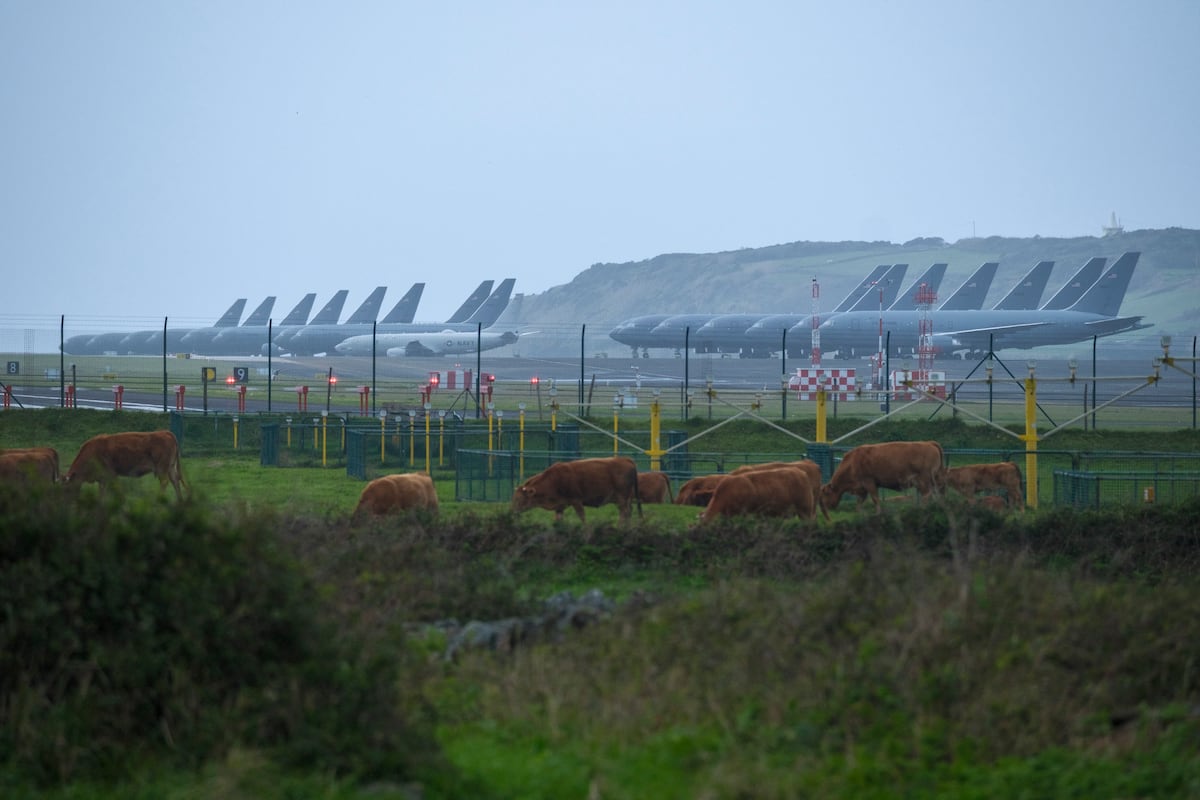
- Aerial Refueling Assets: The existing tanker fleet must be expanded to keep U.S. air operations sustained over critical targets.
Merely acquiring more advanced platforms, like the forthcoming B-21s and F-47s, does not adequately address these intersecting deficiencies.
Reevaluating Procurement Strategies
The U.S. must reassess its understanding of airpower versus the Air Force’s capabilities. Air control has been distributed across different military branches, with an emphasis on integrated operations rather than exclusive Air Force dominance. Current procurement priorities disproportionately favor advanced crewed platforms at the expense of more versatile assets that provide persistent operational presence.
Recommendations for Future Investment
To effectively enhance U.S. airpower, the following strategies should be considered:
- Focus on Uncrewed Systems: Investing in lower-cost drones capable of persistent operations, which can absorb losses and sustain firepower over extended periods.
- Strategic Munitions Procurement: Developing deep inventories of affordable munitions is critical for maintaining operational readiness.
- Enhanced Refueling Capabilities: Expanding the tanker fleet dedicated to uncrewed aerial refueling will improve mission sustainability.
Conclusion
Until the Pentagon recognizes the distinction between traditional airpower and the evolving landscape of modern warfare, the U.S. risks repeating past mistakes. The continued emphasis on high-cost, limited-capability platforms may hinder the military’s overall effectiveness. Embracing a broader, more nuanced view of airpower will ensure that American forces remain capable of addressing future challenges in an increasingly complex global environment.
Maximilian K. Bremer is a nonresident fellow with the Reimagining US Grand Strategy Program at the Stimson Center and leads Mission Engineering and Strategy for Atropos Group. Kelly A. Grieco is a senior fellow with the same program at Stimson and serves as an adjunct professor at Georgetown University’s Center for Security Studies.