Northrop Grumman’s Financial Struggles Amid B-21 Raider Production
An Expensive Evolution
In a recent disclosure, Northrop Grumman revealed a staggering $477 million loss associated with the B-21 Raider, reflecting the company’s struggles amidst rising manufacturing and materials costs tied to its ambitious sixth-generation stealth bomber project. This loss, reported during the first quarter of 2025, is attributed significantly to a redesign of its production process aimed at enhancing production rates. As Northrop attempts to streamline its operations to meet the demands of this cutting-edge project, the financial implications have proven steep.
Production Process Overhaul
Northrop, in its financial statement, clarified that much of the substantial loss stemmed from recent changes in the production line of the B-21 Raider. These adjustments targeted an increase in the rate of aircraft production but resulted in unexpected financial repercussions across all five low-rate initial production lots. In a candid earnings call, CEO Kathy Warden acknowledged the disappointment stemming from these changes but simultaneously expressed optimism about the ongoing development of the program. She emphasized that the company is making solid progress, successfully demonstrating the aircraft’s performance objectives through rigorous testing.
Impact on Financial Performance
The financial fallout from the B-21 project was not isolated. The loss contributed to a broader $183 million decline in Northrop Grumman’s aeronautics systems division, which noted sales of $2.8 billion — an 8% decrease from the same quarter in the previous year. Overall, Northrop’s profits plummeted by $498 million compared to the prior year, with almost the entirety of this downturn linked to challenges faced during B-21 production.
Moving Forward in Development
Despite these financial setbacks, Warden remains committed to the B-21 program’s potential, assuring stakeholders that the engineering and manufacturing development phase is nearing completion. The aircraft is currently undergoing critical tests designed to validate its capabilities. Furthermore, Northrop is actively engaged in the initial production phases, with preparations for future production lots already underway. This proactive approach is anticipated to mitigate risks associated with creating a new and advanced aircraft.
The B-21 Raider’s Background
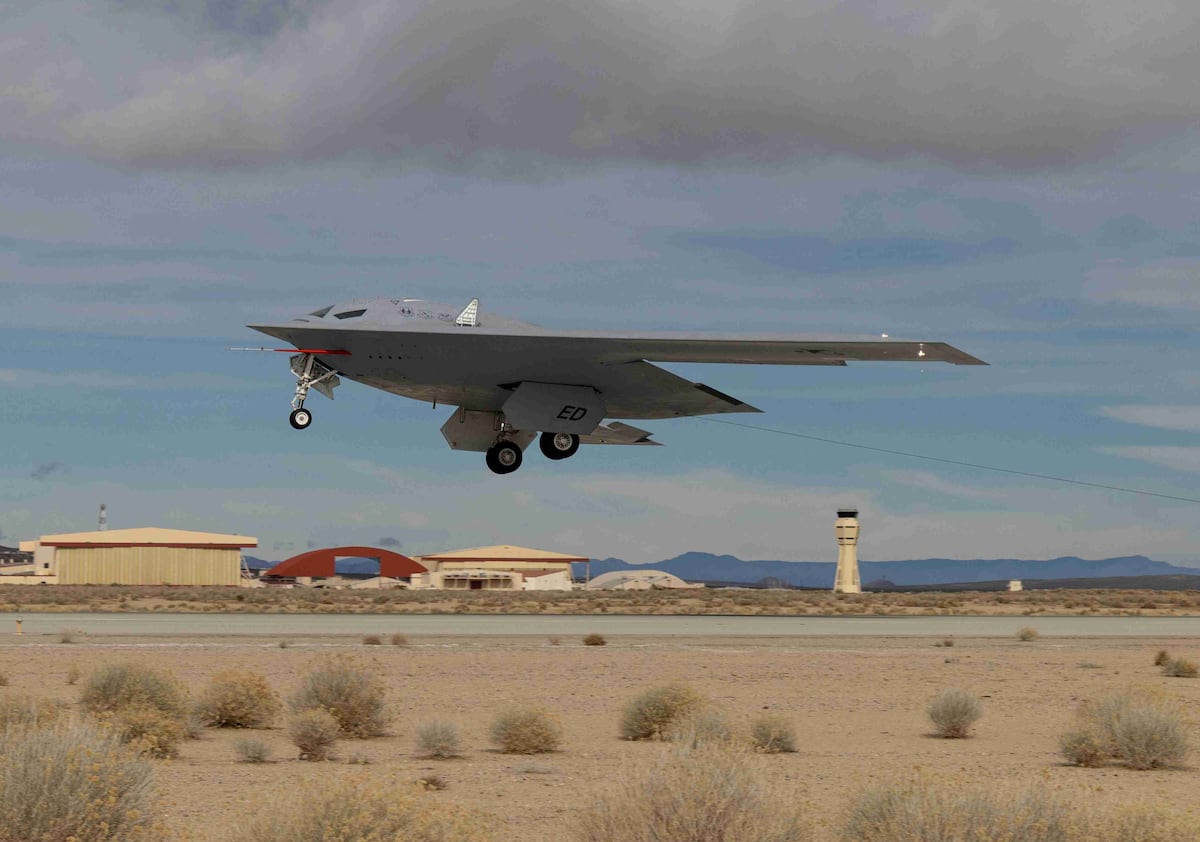
The B-21 Raider was officially rolled out by the Air Force and Northrop Grumman in December 2022, marking a significant milestone in the development of modern military aviation. Following its inaugural flight in November 2023, the B-21 has garnered praise for its relatively smooth developmental trajectory. However, Warden has been transparent about the financial challenges, hinting that initial losses were expected as Northrop ramped up its production efforts.
Future Procurement Goals
Looking ahead, the Air Force plans to procure a minimum of 100 B-21s, with the potential to expand that number. During its development, the average procurement unit cost of the B-21 was reported around $692 million, adjusted for inflation. This procurement strategy reflects a strategic pivot from older bombers like the B-1 Lancer and B-2 Spirit, acknowledging the need for advanced capabilities in today’s military landscape.
Manufacturing Lessons and Challenges
Warden outlined that the production changes leading to current financial strains derived from valuable lessons accrued during the scaling of B-21 manufacturing. These adjustments, made in collaboration with the Air Force, are believed to position Northrop Grumman favorably as it transitions from the initial production phase to full-rate production. The CEO indicated that material costs were only part of the equation; the production changes were the primary focus of the financial impact.
Concurrent Projects and Overruns
In addition to the B-21 Raider, Northrop Grumman is also spearheading the LGM-35A Sentinel, a next-generation intercontinental ballistic missile intended to replace the aging Minuteman III system. However, this project is not without its challenges, facing cost overruns largely due to increased expenses from constructing essential infrastructure such as launch facilities. Warden emphasized the importance of restructuring Sentinel’s program to ensure that design changes are fully integrated into its development and contractual agreements.
Importance of Adaptability
As Northrop Grumman navigates these dual challenges of the B-21 and Sentinel projects, their focus on adapting to both technical and logistical hurdles remains critical. The ability to learn from manufacturing challenges and implement effective changes alongside the Air Force demonstrates a commitment to delivering advanced capabilities while managing ambitious production schedules.
Northrop Grumman’s journey with the B-21 Raider serves as a reminder of the complexities involved in defense contracting and equipment development. Balancing innovation with financial sustainability continues to be a pressing challenge as the company strives to meet the high expectations set for this groundbreaking aircraft.