Potential Agreement on B-21 Bomber Production Amidst Government Shutdown Challenges
Prospects for Increased Production
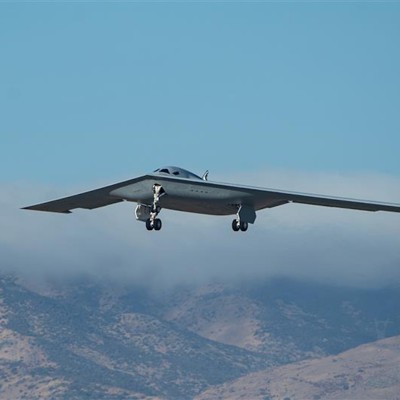
Kathy Warden, CEO of Northrop Grumman, indicated that a contract to augment the production of the B-21 bomber for the U.S. Air Force may materialize by March. However, the imminent threat of a government shutdown poses significant hurdles to these discussions, reminiscent of previous interruptions experienced last fall.
- Funding Context: Warden noted that no binding agreement has been established regarding the $4.5 billion in reconciliation funding allocated last year to expedite the manufacturing process of the next-generation bomber. Despite this uncertainty, she expressed optimism for a resolution within the coming months.
Financial Implications and Strategic Partnerships
Northrop Grumman has already absorbed approximately $2 billion in losses as it strives to expedite the B-21 program and offset costs for materials. During the company’s fourth-quarter earnings call, Warden emphasized the importance of developing a mutually advantageous agreement with the Air Force to ensure expedited delivery of this pivotal operational capability.
- Investment Requirements: “We are diligently working with the Air Force on plans to enhance the production rate of the B-21 program,” she stated. “However, such an agreement would necessitate further investment in our production facilities, estimated at $2 billion to $3 billion over several years.”
Government Shutdown Concerns
The impending partial government shutdown—set to commence if the Senate cannot finalize funding for various federal departments, including the Defense Department—complicates the situation. Warden acknowledged that prior shutdowns have previously stalled negotiations vital for the program’s acceleration.
Douglas Royce, a senior analyst at Forecast International, downplayed the potential impact of the shutdown on Northrop Grumman’s production acceleration. He stated, “Though uncertainties arise during shutdowns, if this hiatus is brief, it likely won’t materially affect discussions. However, an agreement is not guaranteed, regardless of shutdown conditions.”
B-21 Program Objectives
The Air Force has earmarked plans to procure 100 B-21 bombers, although some officials are advocating for an increase to nearly 150 aircraft. Northrop Grumman recently secured the low-rate initial production contract for Lot Three and obtained advanced procurement funding for Lot Five by year-end.
- Contract Milestones: An Air Force representative confirmed the service’s receipt of milestone decision authority, signifying successful execution of these contracts in December.
Future Defense Investments
Warden also conveyed that Northrop Grumman is focusing on the development of future defense initiatives, including components for advanced systems like the Golden Dome missile defense system, Project Talon drone wingman, and the Navy’s next-generation fighter jet.
- “We aim to ensure liquidity for further investment in these areas, as they align with the administration’s strategic priorities in national defense, focusing on both crewed and uncrewed platforms,” she stated.
Despite projected developments, Warden admitted uncertainties exist regarding the timeline for contract awards in these upcoming programs, anticipating progress over the next 24 months.
Congressional Budget Developments
Recent congressional appropriators allocated nearly $900 million for the development of the Navy’s next-generation fighter (designated F/A-XX), countering the Pentagon’s strategy to limit funding in favor of the Air Force’s F-47. Notably, this annual defense appropriations bill is among those stalled in the Senate, adding another layer of complexity to ongoing discussions.
As the deadline approaches, stakeholders within the defense community will remain vigilant, monitoring the forthcoming negotiations that are crucial for advancing U.S. military capabilities.