Current Landscape of European Defense Spending: Winners and Losers
Record Investments Amidst Growing Threats
In 2025, European nations achieved unprecedented levels of defense funding, channeling investments into a diverse array of military capabilities, including munitions, armored vehicles, air defense systems, and naval assets. This escalation in military expenditure marks a pivotal response to evolving security challenges, particularly in the wake of geopolitical tensions in Ukraine. Notable beneficiaries from this spending surge include major players such as Germany’s Rheinmetall, Sweden’s Saab, and the UK’s BAE Systems.
Conversely, certain enterprises, like France’s Naval Group, have found themselves struggling to secure new orders, highlighting the competitive and sometimes fragmented nature of the defense market in Europe.
Industry Winners
-
Saab: The Swedish defense firm made a significant impact in 2025, highlighted by France’s recent procurement of two GlobalEye early warning and control aircraft. Additionally, Poland awarded Saab a contract for its A26 submarines under the Orka program. Other successes included sales of Gripen fighters to Thailand and Colombia, as well as securing orders for air defense systems from Sweden, Czechia, and Latvia. With an optimistic forecast, Saab increased its sales outlook for the year by 20% to 24%.
-
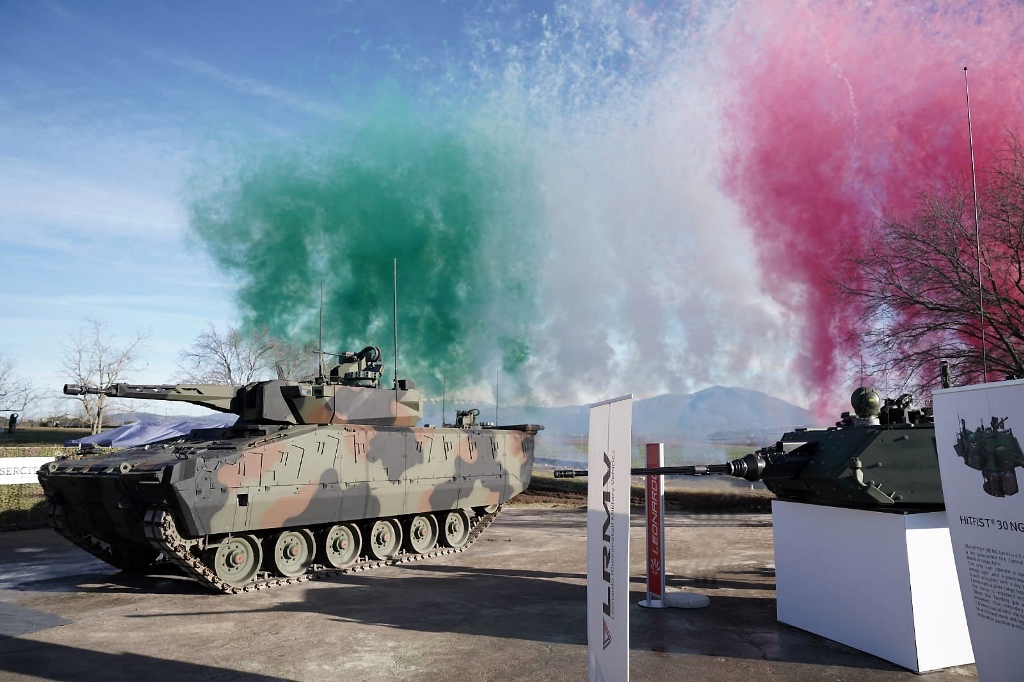
Rheinmetall: Experienced a robust year with contracts valued in the billions, notably supplying vital ammunition and vehicles to the German forces. The company’s collaboration with Italy’s Leonardo led to an initial order for its Lynx combat vehicle. As part of its expansion strategy, Rheinmetall acquired a German shipyard, widening its portfolio to include naval vessels, while also establishing a satellite-intelligence constellation for the Bundeswehr, resulting in a remarkable 28% increase in sales within the first nine months of the year.
-
BAE Systems: The UK contractor garnered attention, securing a £10 billion deal for Type 26 frigates from Norway. It was also notably active in the U.S. market, winning a $1.7 billion contract for laser-guiding technology for the U.S. Navy and facilitating a lucrative £8 billion deal involving Eurofighter Typhoon jets to Turkey. Following strong operational performance, BAE revised its sales and profit forecasts upwards.
-
MBDA: This pan-European missile manufacturer capitalized on the growing demand for air defense, gaining Denmark as the third EU customer for the SAMP/T system over the American Patriot. Additional orders from France and Italy replenished missile stockpiles, and MBDA enhanced its production capabilities across France, Italy, and the UK to meet the increasing government demands in this sector. The company’s recent foray into laser weapon systems further diversifies its offerings.
-
Global Combat Air System (GCAP): The tri-nation initiative involving Italy, the UK, and Japan maintained momentum despite some friction between partners. Notably, challenges surrounding technology sharing and program pacing were evident, yet the project appears to be moving forward steadily, with a focus on new fighter capabilities slated for delivery by 2035.
Industry Challenges
-
French-German Collaboration on Future Combat Air System (FCAS): The FCAS project, a critical collaboration involving France, Germany, and Spain, faced significant roadblocks due to ongoing disputes between key stakeholders, particularly between Dassault Aviation and Airbus. As tensions rise, the future viability of this ambitious initiative remains uncertain, with leadership conflicts hindering progress.
-
Naval Group: The French shipbuilder encountered a disappointing year, losing out on multiple key contracts. For instance, Canada opted for Hanwha and TKMS for its submarine program, while Poland chose Saab for its Orka submarines. In competitive bids for frigates in Norway, Naval Group lost to BAE’s Type 26 design. Although it fulfilled existing contracts with the French and Greek navies, the absence of new large-scale international contracts raised concerns about its market position.
Strategic Implications for European Defense
The events of 2025 underscore a critical evolution in Europe’s defense landscape. The dynamics of inter-state collaboration, competitive bidding, and technological innovation will shape the continent’s military capabilities in light of external threats. As nations strategize to enhance their defense postures, the success of individual companies will likely hinge upon their ability to innovate and navigate complex joint programs.
The implications of these developments extend beyond immediate contracting victories; they serve as a barometer for the state’s readiness to face future challenges, necessitating a more cohesive European defense strategy that fosters cooperation rather than competition.
As the European Union pursues ambitious defense policies—highlighted by the €150 billion joint procurement initiative and the publication of its first defense white paper—balancing national interests with collaborative efforts will be paramount in strengthening the continent’s security framework.
These shifts not only create opportunities but also highlight vulnerabilities in existing structures, as stakeholders must adapt to a rapidly changing geopolitical landscape marked by urgency and uncertainty.