

Iranian Loitering Munition: The Rezvan and Its Implications
Introduction of the Rezvan Loitering Munition
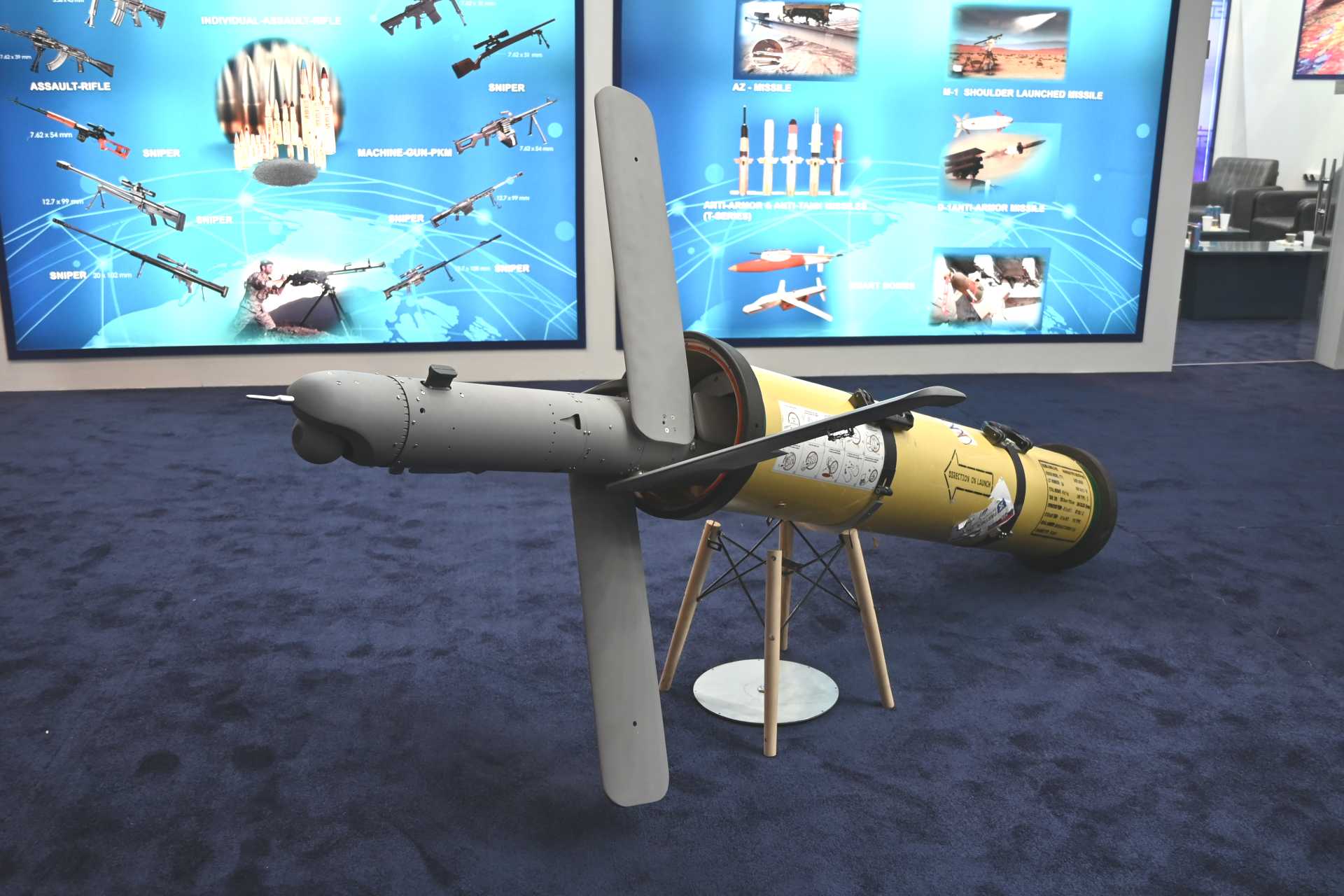
Iran has introduced the Rezvan, a loitering munition also referred to as a kamikaze drone and designated GLMD-24W4.5-R2. This platform enhances Iran’s close-range precision strike capabilities and poses a significant risk to U.S. military operations in the Middle East, particularly in scenarios involving potential land engagements against Iran. The Rezvan is engineered for direct battlefield applications, featuring capabilities to identify, track, and engage targets within a 20-km operational radius during a single mission cycle.
Tactical Implications for U.S. Forces
The Rezvan enhances Iranian forces and allied groups’ capacities to execute rapid, localized strikes against various targets, including maneuver units, logistical convoys, and forward operating bases, often with minimal advance warning. The system’s deployment compresses decision timelines at the tactical level, increasing vulnerabilities during troop movements and staging operations. This necessitates that U.S. forces reassess their protective measures, including dispersion tactics and counter-unmanned aerial systems (UAS) strategies amid high-intensity land engagements.
Operational Pressures
The system fosters an environment of constant surveillance and threat, compelling U.S. ground forces to operate under conditions of heightened scrutiny. The operational tempo of U.S. units may be adversely affected, requiring increased mobility and resource allocation for defense rather than offensive maneuvers.
Transformative Role of Loitering Munitions
Loitering munitions have emerged as a pivotal capability in contemporary combat, significantly reshaping the dynamics between target detection and engagement. Their recent operational record reflects success in neutralizing critical assets—such as artillery positions, armored vehicles, air defense systems, and command structures—under tight timelines and with remarkable precision.
Integration of ISR with Strikes
The hallmark feature of this technology is the integration of intelligence, surveillance, and reconnaissance (ISR) with strike capabilities within a single platform. This convergence allows decentralization of engagements, enabling small units to conduct precise attacks independently. Such a configuration minimizes decision-making timelines and enhances tactical responsiveness.
The Persistent Threat of Rezvan
The proliferation of systems like the Rezvan creates a sustained low-altitude aerial threat, differing from traditional air threats. These munitions can linger in the operational area, observe troop movements, and strike when forces are most vulnerable. This tactic places relentless pressure on ground units, curtailing their operational freedom and extending psychological strain, which can degrade overall mission efficacy over time.
Relevance in Regional Conflicts
The impact of the Rezvan is evident in active theaters such as Iraq and Syria, as well as in the Gulf region. This system empowers Iranian forces to strike with precision without reliance on complex ISR networks, creating a multi-layered threat landscape. U.S. forces may simultaneously contend with indirect fire, UAV reconnaissance, and loitering munition assaults within condensed operational windows.
Strategic Vulnerabilities for U.S. Forces
The threat presented by the Rezvan becomes exponentially more pressing when employed in coordinated group engagements. Its lightweight and user-friendly design facilitate deployment by multiple small teams over dispersed areas, leading to overlapping engagement zones. This model escalates the saturation challenge for counter-UAS systems and complicates defensive prioritization.
Targeting of Forward Operating Bases
Forward operating bases become particularly vulnerable in this context. Unlike undirected projectiles, the Rezvan can pinpoint specific assets within a base—such as command centers, communication networks, and air defense installations. This precision targeting undermines passive defense responses and increases the necessity for active, multi-layered defense systems capable of addressing low-altitude threats swiftly.
Impact on Logistics and Convoy Operations
Logistical activities are also at risk. Effective supply lines are crucial for sustaining combat capabilities; thus, the Rezvan can be employed to surveil transport routes, discern convoy types, and select key vehicles for engagement. A successful strike against essential supply vehicles can have substantial repercussions, creating bottlenecks, delaying resupply efforts, and prompting rerouting under hostile conditions.
Constraints on Maneuver Warfare
In maneuver warfare, the Rezvan system imposes regulations on troop concentration and mobility. U.S. units may need to spread over larger areas, diminishing combat density at decisive points. Additionally, the imperative to avoid detection may restrict the choice of routes and staging locales, complicating operational planning.
Technical Specifications and Design Insights
Technical analysis indicates that the Rezvan (GLMD-24W4.5-R2) employs a canisterized, tube-launched architecture, optimized for swift deployment and minimized exposure. It enables launch from vehicles or concealed sites, facilitating rapid repositioning post-launch. The munition weighs approximately 41 kg and is armed with a 24-kg HEAT-fragmentation warhead, making it lethal against light armored targets, personnel, and key infrastructure.
Flight and Targeting Performance
The airframe features fixed forward canards aiding aerodynamic stability and a cylindrical fuselage suited for tube storage. The system utilizes a folding multi-blade pusher propeller post-launch for efficient propulsion. Notably, it likely incorporates an electro-optical TV seeker, allowing for real-time video transmission and precise terminal guidance.
Strategic Evolution in Iran’s Defense Capabilities
The characteristics of the Rezvan, including its estimated 20 km range and 20-minute endurance, reflect a focus on immediate battlefield impact rather than extended operational persistence. This design contrast with systems like the Hero-90 highlights Iran’s commitment to engineered simplicity in its unmanned systems, ensuring adaptability in communication-limited environments.
Despite longstanding technological hurdles and sanctions, Iran has demonstrated its capacity to develop and operationalize advanced unmanned capabilities through reverse engineering and pragmatic engineering solutions. The Rezvan exemplifies Iran’s adaptation of observed operational concepts into deployable systems that align with its doctrine of asymmetric warfare.
Broader Strategic Considerations
The proliferation and international exposure of the Rezvan underscore Iran’s intention to expand its operational capabilities and influence. The system’s portability and accessibility make it a candidate for transfer to partner forces and proxy groups, augmenting the likelihood of its deployment across various operational theaters.
Overall, the Rezvan loitering munition complicates the threat landscape for U.S. forces, contributing to a persistent, distributed, and scalable threat that can disrupt military operations, degrade the tempo of engagements, and increase attrition rates. The vital aspects of its effectiveness lie not in range, but in its timing, proximity, and the integration of detection and strike capabilities into a single, agile system operative within immediate conflict zones.



