

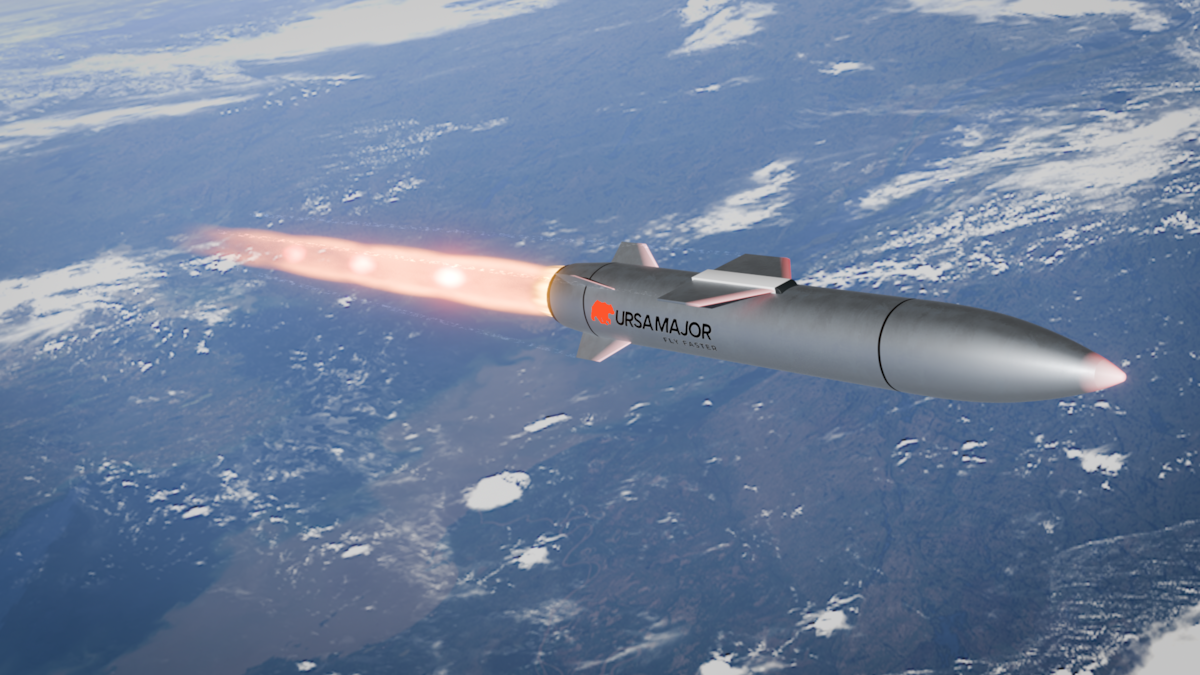
Advancements in Hypersonic Technology: The Ursa Major HAVOC Missile System
The United States is on the verge of enhancing its military capabilities with the introduction of a new class of hypersonic missiles, set to be deployable from various platforms including fighter jets, bombers, and ground-based launch systems. Notably, these missiles can also be launched from space, marking a significant evolution in the realm of missile technology.
Introduction of the HAVOC Missile System
Ursa Major, a defense manufacturing firm based in Colorado, recently unveiled its HAVOC missile system. This medium-range hypersonic weapon employs a liquid rocket engine, enabling it to change speed mid-flight. Furthermore, the missile’s design allows adaptability for integration with multiple rocket motor technologies—from aerial combatants to vertical launch systems.
Key Features:
- Versatile Launch Platforms: Capable of being deployed from aircraft, ground launchers, and even space.
- Flight Modulation: The ability to alter speed in transit enhances targeting options and evasion capabilities.
- Core Module for Target Engagement: Designed specifically for precision strikes against hypersonic and high-velocity targets.
Ursa Major CEO, Chris Spagnoletti, emphasized the necessity of innovative defense solutions, stating, “To match our adversaries, we must prioritize speed, cost-effectiveness, and scalability.” The HAVOC missile system is explicitly designed to be produced swiftly and in substantial volumes, thereby equipping warfighters with a reliable and versatile deterrent.
U.S. Military’s Strategic Focus on Hypersonics
As global threats continue to evolve, the U.S. military is intensifying its focus on hypersonic missile capabilities. The Army, Air Force, and Navy are concurrently developing a range of hypersonic programs, including:
- Army: Long-Range Hypersonic Weapon (LRHW)
- Air Force: Hypersonic Attack Cruise Missile (HACM)
- Navy: Conventional Prompt Strike (CPS)
Despite efforts commencing in the early 2000s, the U.S. has faced developmental delays, particularly as both Russia and China have made significant strides in hypersonic technologies.
Strategic Comparisons with Adversaries
A key distinction between the hypersonic programs of the U.S. and its primary adversaries lies in the intended payloads. Russian and Chinese hypersonic missiles are often designed to carry nuclear warheads. In contrast, most U.S. hypersonic systems do not include this capability. According to a report from the Congressional Research Service released last August, U.S. hypersonics may demand higher precision and are technologically more complex to develop, which poses unique challenges as opposed to the comparatively straightforward nuclear delivery mechanism employed by Russia and China.
- Testing Frequency: China has reportedly conducted up to 20 times as many hypersonic missile tests as the U.S.
- Strategic Facilities: China is also investing in underground launch structures, which could provide strategic advantages in terms of survivability against preemptive strikes.
Implications for National Security
The development and deployment of hypersonic weapons raise important strategic discussions regarding escalation and deterrent capabilities. Analysts differ on the potential outcomes associated with hypersonic advancements, with some pointing to Congressional concerns regarding nuclear escalation leading to funding restrictions. These dynamics highlight the need for nuanced understanding of threat perception and escalation pathways, which could inadvertently lead to heightened tensions or conflict.
Conclusion
As the hypersonic arms race accelerates, the U.S. must continue to innovate its defense strategies and capabilities. The HAVOC missile system from Ursa Major represents a significant leap forward, blending speed, adaptability, and production efficiency. However, the broader implications of these advancements on international security and military strategy will require continuous evaluation and discourse among policymakers and defense analysts alike.