Operational Milestone for the MH-139A Grey Wolf Helicopter
First Mission Execution
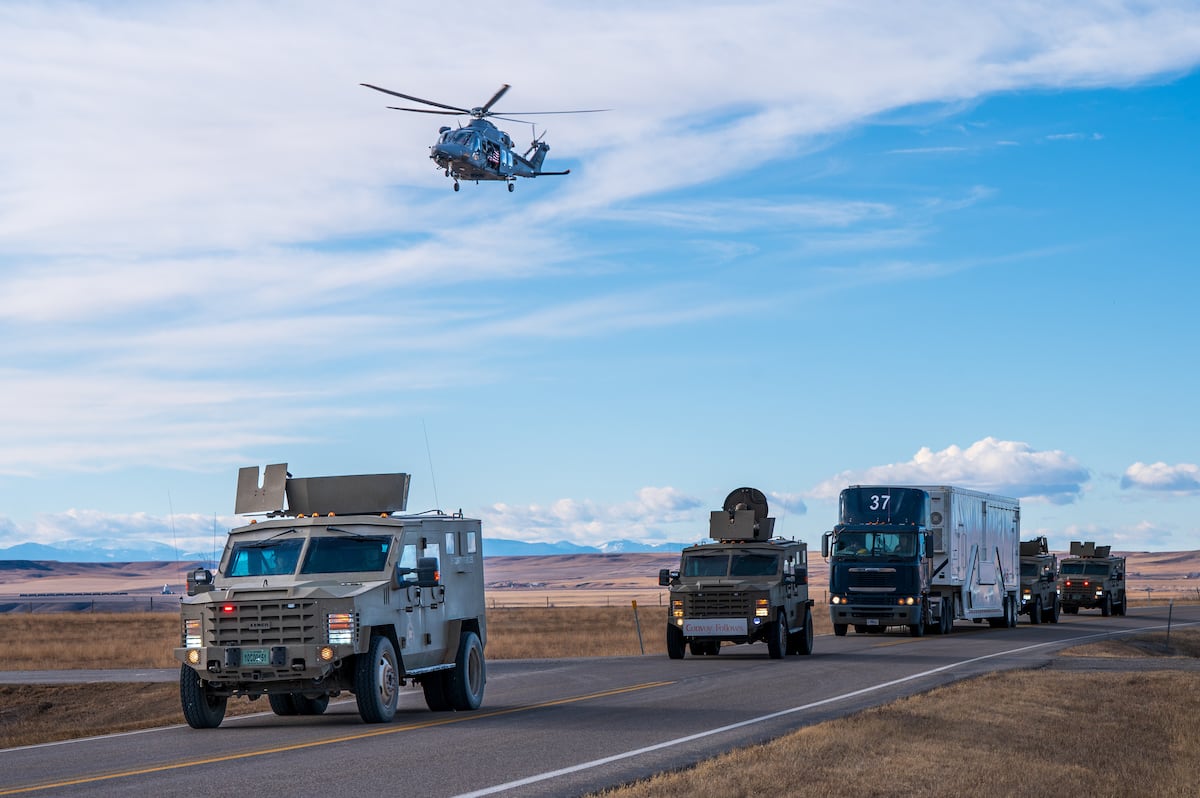
On January 8, two MH-139A Grey Wolf helicopters successfully executed their inaugural operational task by escorting a Minuteman III intercontinental ballistic missile (ICBM) convoy. This significant mission was conducted by the U.S. Air Force and highlights the operational capabilities of this modern platform.
Mission Details
- Pilots: The aircraft were flown by Capt. Michael White and Capt. Maxwell Turner from the 40th Helicopter Squadron, based at Malmstrom Air Force Base, Montana.
- Duration and Coverage: Over a duration of six hours, the MH-139As accompanied a convoy of missile maintenance and armored security vehicles from the 341st Missile Security Operations Squadron to a secure launch facility more than 100 miles east of Malmstrom.
- No Refueling Required: The mission was executed without the necessity for mid-air refueling, demonstrating the helicopter’s operational endurance.
Capabilities of the MH-139A
The MH-139A is a militarized variant of Boeing’s Leonardo AW139, designed to replace the legacy UH-1N Huey helicopters. It offers several advancements, including:
- Speed and Capacity: Approximately 50% faster cruise speed and the ability to accommodate double the number of armed personnel compared to its predecessor.
- Enhanced Defense Systems: Features such as improved missile warning systems and countermeasures have been integrated to enhance operational protection.
- Avionics and Navigation: Equipped with a digital glass cockpit and a four-axis autopilot, the Grey Wolf improves situational awareness and readiness for aircrew members.
- Communication: Robust communication systems facilitate seamless coordination with accompanying ground units, supporting comprehensive operational effectiveness.
Strategic Impact
Maj. Gen. Stacy Jo Huser, commander of the 20th Air Force at F.E. Warren Air Force Base, remarked on the operational significance of the mission, stating:
“Executing our first convoy mission with two MH-139s marks a significant step forward in strengthening our missile security operations. The MH-139 allows us to continue supporting our ICBM enterprise for decades to come with increased speed, range, and lift.”
Operational Area and Mission Context
The mission covered Malmstrom’s extensive area of responsibility, encompassing 13,800 square miles and over 100 dispersed launch facilities across varied terrains, including prairies, plains, and mountainous regions.
Maj. Nicholas Smith, another pilot from the 40th Helicopter Squadron, emphasized the aircraft’s handling capabilities, noting:
“The Grey Wolf can bring all the required firepower necessary to defend our nation’s nuclear force in a real scenario.”
Program Challenges and Future Outlook
The MH-139A program has encountered various challenges since the Air Force received its first delivery from Boeing in December 2019. These obstacles include:
- Fleet Reductions: Originally intended to procure 80 helicopters, the fleet size has been reduced to 42 due to budgetary constraints, leading to a Nunn-McCurdy cost overrun breach.
- Expansion Following Review: Following a Pentagon assessment, the target fleet has now been increased to at least 56 helicopters.
- Timeline Delays: The program has faced testing delays, FAA certification issues, and integration challenges, shifting the operational timeline from an initial rollout in 2019 to expected operational capabilities by 2026.
Looking Ahead
The successful completion of the January 8 flight is a pivotal development as Air Force Global Strike Command moves forward with plans to declare initial operational capability for the MH-139 aircraft fleet by mid-2026. Additional units of the Grey Wolf are anticipated to be stationed at both F.E. Warren and Minot Air Force Base, North Dakota, further enhancing the United States’ ICBM security framework.