

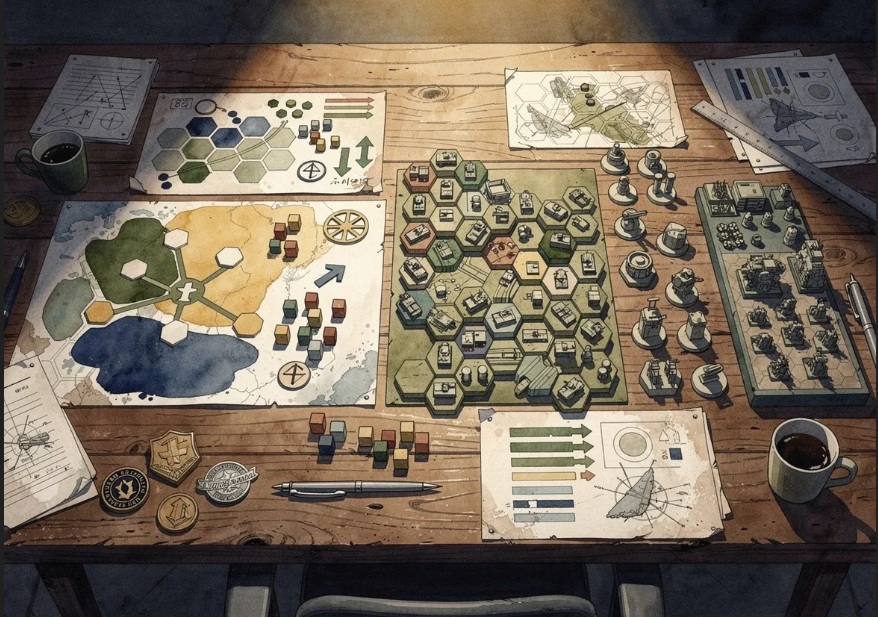
Advancing Marine Corps Force Design Through Wargaming
Historical Context and Command Guidance
In 2019, General David Berger, the 38th Commandant of the Marine Corps, initiated a transformative approach towards force planning with the issuance of his Commandant’s Planning Guidance. This document articulated a clear directive to prepare the Marine Corps for contemporary combat scenarios, emphasizing the pivotal role of wargaming as a mechanism for strategic evaluation and concept validation.
General Berger’s vision heralded the implementation of enhanced, systematic wargaming activities, which bore fruit in the form of over 20 major wargames executed within the first two years. These exercises supported the Marine Corps’ ambitious Force Design 2030 initiative, which sought to glean insights from historical wargaming practices, especially those from the inter-war era, to bolster opposed amphibious assault capabilities.
The Imperative for a Structured Wargaming Approach
Despite the earnest efforts, the Marine Corps, alongside the larger Department of Defense (DoD), has yet to establish a formalized framework governing the organization and sequencing of force planning wargames. This void poses significant challenges, especially given that wargames often serve as foundational tools for assessing operational requirements and shaping both material and non-material solutions. As the Marine Corps commits substantial investments in personnel and equipment, the necessity for rigorous analytical frameworks becomes paramount.
General Berger’s critique extends to the broader defense community, where a tendency towards inadequate wargaming often leads to hastily formulated concepts that lack thorough testing. The risk of failing to integrate systematic wargaming not only complicates force design but undermines the overall capacity of the DoD to adapt to evolving geopolitical landscapes.
The Cycle of Research in Military Wargaming
The late Peter Perla, a prominent figure in modern wargaming, described a comprehensive cycle of research that encapsulates wargaming, exercises, and analytic processes. This cycle interlinks historical data, real-world operations, and wargaming insights, fostering a nuanced understanding of current realities while paving the way for future strategic adaptations. Key considerations include:
- Holistic Learning: Synthesizing knowledge from diverse sources ensures wargaming’s relevance and effectiveness within the force design paradigm.
- Feedback Mechanisms: Insights gleaned from wargames should continually inform subsequent analytic and operational components.
Why Sequenced Wargames Are Essential for Effective Force Planning
Force design evolves over extended periods, requiring iterative learning across various domains. Recognizing that organizational change is an ongoing process allows for the early adoption of potentially valuable elements. An organized wargaming framework, based on iterative learning principles, prevents the revisit of already validated components while ensuring that emergent issues are addressed with appropriate models at the correct phases of the research cycle.
Furthermore, with the recent dissolution of the Joint Capabilities Integration and Development System, there is an amplified need for clarity in how wargaming can validate requirements aligned with joint operational challenges. The new emphasis on mission engineering highlights the necessity of embedding military utility into capability development through collaborative wargaming efforts, ensuring that technical solutions are precisely tailored to operational demands.
The Five-Phase Wargaming Framework
A structured, five-phase wargaming framework is proposed to streamline operational planning within the DoD. This sequence addresses all aspects of force design from problem identification to solution implementation.
Phase 1: Problem Identification
This phase establishes whether a fundamental shift in strategic and operational challenges is anticipated. A thorough strategic scan allows for the identification of emerging threats, requiring services to analyze the future operating landscape, addressing questions such as:
- What new strategic challenges may arise?
- How could these challenges impact our current capabilities?
Phase 2: Operational Concept Development
Once challenges are identified, the next step involves determining if viable operational concepts currently exist or need development. This phase necessitates rigorous assessment of both established military operational frameworks and innovative approaches through comparative wargaming, structured to evaluate:
- The adaptability of existing concepts to new challenges.
- The viability of novel operational methodologies.
Phase 3: Gap Analysis
This critical phase transforms hypotheses into actionable theories of success. It involves assessing whether current capabilities can fulfill future operational requirements and identifying gaps that need to be addressed. Key considerations include:
- Assessing the feasibility of implementing new operational concepts.
- Identifying areas where current capabilities fall short.
Phase 4: Capability Requirements
Building from the insights of previous wargames, this phase focuses on translating identified gaps into concrete capability requirements, requiring quantitative analysis to validate findings. Integral elements include:
- Collaboration between analysts and technology developers to construct effective solutions.
- Ensure that proposed capabilities align with operational contexts.
Phase 5: Solution Exploration
In this final phase, potential solutions are evaluated to address previously identified requirements. Players engage in design thinking activities to refine operational capabilities, emphasizing:
- User insights guiding final capability development.
- Testing proposed solutions in representative scenarios to mitigate risks before implementation.
Ensuring Effective Wargaming Practices
Criticism regarding the quality and function of wargames within the DoD underscores a pressing need for formalized standards and methodologies. A referenceable standard can refine wargaming practices, ensuring that insights from these exercises effectively inform military operations and force design.
The recent initiatives, notably the reestablishment of collaborative forums like the Defense Wargaming Alignment Group, should prioritize the promotion of this five-phase framework as a template for systematic wargaming in support of future capability development.
Final Thoughts
Institutionalizing a robust wargaming framework not only advances the Marine Corps’ Force Design 2030 initiative but also enhances the overall effectiveness of the DoD in adapting to shifting global dynamics. By embracing systematic methodologies and seeking collaborative insights from across disciplines, the defense community can ensure that it remains agile and well-prepared for the challenges of tomorrow.
This text has been developed with precision for defense professionals, integrating advanced concepts in military wargaming and strategic force design.