
Insights into China’s Emerging Nuclear Submarine Capabilities
Recent Developments in Submarine Technology
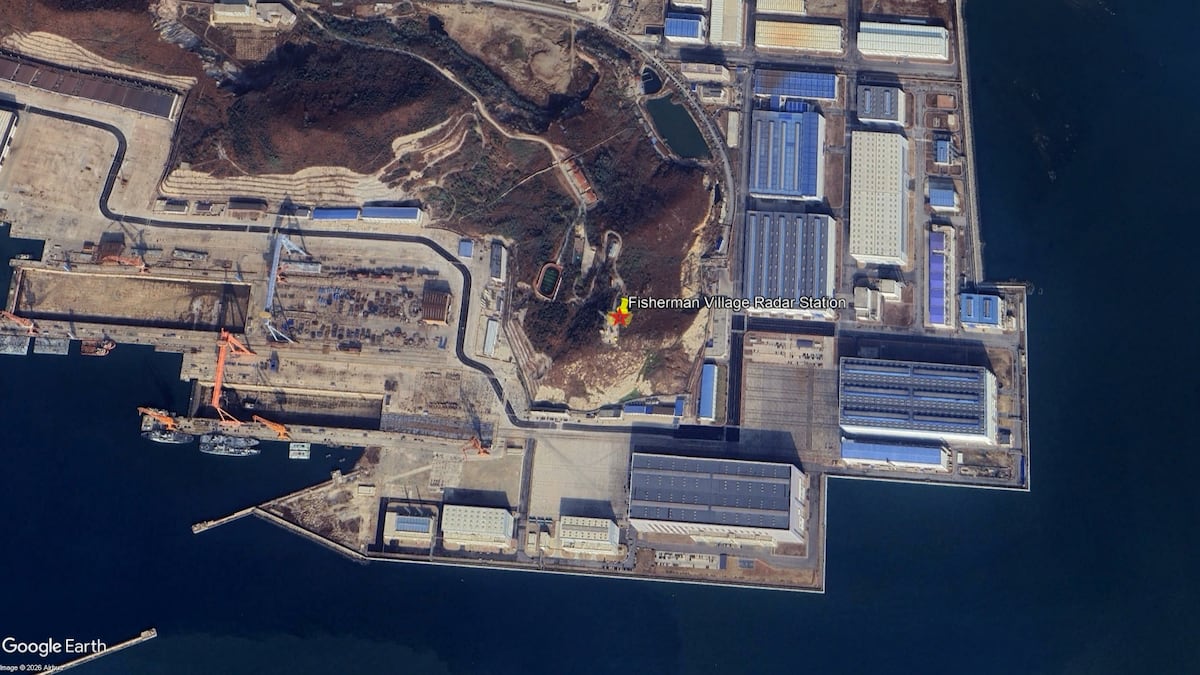
Recent satellite imagery has revealed the presence of a new class of nuclear-powered attack submarine (SSN) being developed by China, specifically identified as the Type 09V, or Type 095. This vessel has been located at the Bohai Shipyard in Huludao, indicating significant advancements in the People’s Liberation Army Navy (PLAN) capabilities.
- Current Status: The Type 09V is in a partially constructed state and is projected to be operational within the next year.
- Displacement Estimates: Analysis suggests its submerged displacement ranges from 9,000 to 10,000 tons.
Evolution of Submarine Fleet
The emergence of the Type 09V underscores China’s intensified focus on modernizing its naval assets. Experts like Rick Joe, a prominent analyst on Chinese military matters, note that the PLAN currently operates a limited number of older model SSNs alongside newer variants:
- Current Fleet Composition:
- Up to two Type 091 SSNs, if still active.
- Two Type 09III, four Type 09IIIA, and two to three Type 09IIIB submarines.
Moreover, Joe estimates that an additional 5-6 Type 09IIIB vessels are undergoing outfitting or sea trials, indicating an ambitious launch rate of approximately three new SSNs annually. For comparison, the U.S. Navy launches around 1.1 to 1.3 submarines per year.
Design and Performance Innovations
The Type 09V is noteworthy for its heightened design specifications, with a width of 40 feet—4 feet more than its predecessor, the Type 09III. Innovations anticipated include:
- X-shaped rudders and retractable diving planes designed to enhance maneuverability and speed.
- The potential adoption of a single or hybrid hull configuration, moving away from the traditional double hull designs seen in prior models.
With a length of approximately 360 feet, the Type 09V features a universal vertical launch system (VLS) with an anticipated eight cells. These cells may house up to three missiles each, similar to the capabilities of the U.S. Virginia-class submarines.
Construction and Strategic Implications
While the timeline for the Type 09V’s entry into service is uncertain, it could extend to 2029 due to necessary fitting-out and extensive trials. China’s shipbuilding strategy often involves constructing two units of new submarine classes before initiating mass production to resolve design flaws. This pattern suggests that the construction of the Type 09IIIB could persist into the early 2030s.
- Production Capacity: The Bohai Shipyard demonstrates substantial production capabilities, with assembly halls that can theoretically support the concurrent construction of 20 SSN-sized vessels.
Technological Advancements and Arsenals
The PLAN is reportedly integrating cutting-edge weaponry into its submarines, including the hypersonic YJ-19 missile. This missile, revealed during a military parade in September 2025, is characterized by:
- An air-breathing scramjet design suitable for deployment via submarine torpedo tubes.
- The potential to significantly enhance anti-surface warfare capabilities without relying on VLS for deployment.
Recent announcements indicated that the PLAN has accepted the YJ-19 into service on its Type 039B conventional submarines, marking a historical milestone as the first nation to equip diesel-electric submarines with hypersonic arms.
Strategic Balancing with Regional Powers
China’s advancements illustrate its commitment to narrowing the technological divide with the United States, particularly in submarine warfare. While the U.S. Navy maintains a lead in anti-submarine capabilities and advanced technologies, China’s rapid pace of innovation in naval systems cannot be underestimated.
- Future Projections: The impending development of the next-generation Type 09VI SSBN may also incorporate elements derived from the SSN advancements, suggesting a strategic interconnection between China’s nuclear deterrent and strike capabilities.
The ongoing evolution of China’s submarine fleet serves as a pivotal element in the broader geopolitical landscape of the Asia-Pacific region, demanding continued attention and analysis from defense policymakers and strategic analysts alike.