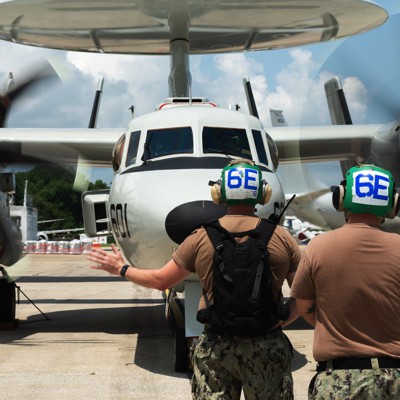

Leveraging AI in Army Airspace Management
Addressing Increasing Complexity in Airspace Operations
As the U.S. Army integrates advanced technologies into its operations, the management of airspace has become significantly more intricate. With the growing deployment of unmanned aerial systems (UAS) alongside other aerial platforms, commanders are confronted with unprecedented challenges in both situational awareness and operational efficiency.
To tackle these difficulties, the Army’s program executive office for intelligence, electronic warfare, and sensors is actively seeking industry input on artificial intelligence (AI) solutions. A recent Request for Information (RFI) highlights the Army’s commitment to obtaining feedback from industry partners, particularly regarding the Next Generation Command and Control (NGC2) initiative.
The Cognitive Load on Commanders
Modern airspace management methods are increasingly strained by an influx of data generated during dynamic operations. Traditional systems often fail to adequately process this information, leading to delayed decision-making and ineffective airspace utilization. This lack of responsiveness can jeopardize mission success and endanger friendly forces.
Key challenges cited in the RFI include:
- Real-time data processing: The ability to quickly analyze and react to vast data streams is crucial for effective airspace management.
- Coordination with Joint Forces: Operations increasingly require synchronization with both U.S. and coalition forces, complicating the airspace landscape.
- Deconfliction of multiple airspace users: The presence of friendly, neutral, and enemy assets mandates sophisticated conflict resolution strategies.
The Push for Rapid Integration of UAS
The Pentagon faces pressure from Defense Secretary Pete Hegseth to accelerate the incorporation of small UAS across all branches of the military. Hegseth has issued directives aimed at promoting rapid development and deployment of drone capabilities. As various services enhance their reliance on UAS, the need for advanced airspace management systems becomes even more pronounced.
In parallel, the Department of Defense is prioritizing the development of counter-drone technologies and comprehensive air-and-missile defense systems. These initiatives are essential as the frequency and complexity of aerial threats grow.
The Role of AI in Transforming Airspace Management
The Army recognizes the transformative potential of AI in addressing airspace management challenges. By utilizing machine learning, predictive analytics, and automation, AI-enhanced solutions can significantly improve operational efficiency. The benefits of these technologies include:
- Enhanced situational awareness: Real-time data aggregation and analysis support better-informed decision-making.
- Optimized airspace allocation: Algorithms can recommend effective allocation strategies based on predictive models of airspace usage.
- Rapid decision-making: Automation can streamline processes, allowing commanders to respond swiftly to changing conditions.
The Army’s RFI emphasizes the necessity for an AI-capable airspace management solution that focuses on UAS operations during the upcoming Joint Pacific Multinational Readiness Center (JPMRC) event. The goal is to deliver a Minimum Viable Product (MVP) that is operationally ready by November 2025, equipped to handle the unique challenges posed in contested and congested environments.
Future Collaboration with Industry
To expedite the development of these critical technologies, the Army invites industry partners to collaborate. Contributions from the defense sector can accelerate innovation and ensure the timely provision of effective airspace management solutions that are essential for maintaining operational superiority.
Responses to the RFI are due by August 29. The Army aims to evaluate vendors’ technologies during the JPMRC Exercise 26-01, providing an opportunity to test AI-enabled systems in realistic operational scenarios, where they must demonstrate their capability to address the complexities of modern airspace.
In summary, the Army’s proactive engagement with industry to leverage AI technologies signifies a strategic commitment to enhancing airspace management. As military operations evolve, so too must the systems that support them, ensuring that commanders are equipped to navigate the complexities of the modern battlespace effectively.