

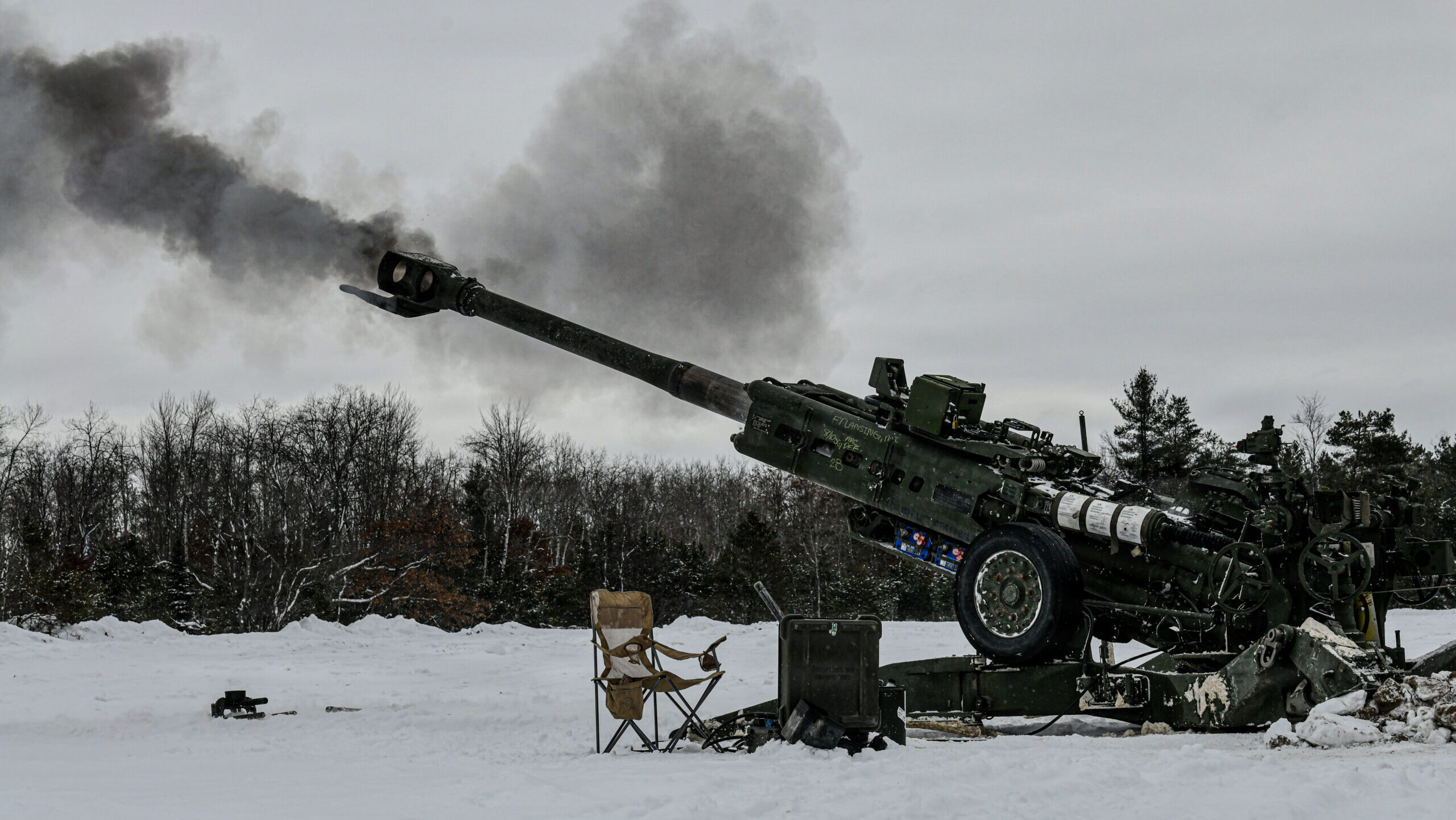
Army Faces Challenges in 155mm Artillery Production at Mesquite Facility
Decline in Production Performance
During a recent congressional briefing, Brent Ingraham, the Assistant Secretary of the Army for Acquisition, Sustainment, and Technology, expressed significant dissatisfaction with the operational status of the Army’s new plant in Mesquite, Texas. The facility, intended to ramp up the production of 155mm artillery projectiles, is currently failing to meet the ambitious target of manufacturing 100,000 shells monthly.
Ingraham’s remarks to lawmakers underscored a shared concern: “I’m not pleased with our progress at Mesquite either. We are indeed in the same situation as you.” His comments strike a critical tone as the Army grapples with increasing demands for artillery production following the conflict in Ukraine.
Heightened Demand Post-Ukraine Conflict
Since the onset of Russia’s invasion of Ukraine, the U.S. Army has sought to significantly boost its artillery output, recognizing the crucial role of artillery in modern warfare. The new Mesquite facility, operational since 2024, was established with the support of General Dynamics Ordnance and Tactical Systems (GD-OTS). As a pivotal part of this initiative, three Universal Artillery Projectile Lines were set up to manufacture metal components, including shell casings.
However, despite the extensive investment and infrastructure, not a single artillery shell has been produced so far, raising questions about the efficacy of the program. Currently, the Army is only capable of producing approximately 56,000 shells per month, falling drastically short of its goals.
Key Concerns Raised by Lawmakers:
- Project Delays: The inability to produce any projectiles has sparked frustration among congressional leaders, notably Rep. Rob Wittman, who remarked, “It’s been two years, and we’ve yet to see even one 155mm round from this facility.”
- Future Uncertainty: The absence of production left lawmakers questioning the strategic direction of the facility and its overall viability.
Contractual Oversight and Future Negotiations
Previous reports indicated that the Army was reconsidering its contract with GD-OTS, potentially terminating the company’s oversight of production at the Mesquite facility. Nevertheless, Ingraham confirmed that the Army has opted to continue negotiations with GD-OTS, focusing on optimizing the facility’s operational capacity to align with projected production goals.
Ingraham’s Insights on Future Investments:
- Ingraham hinted at anticipated investments from GD-OTS to enhance production capabilities, particularly for rounds that would support international military sales.
- He stated, “We are currently engaged in discussions to formalize the specifics regarding production lines and output volumes.”
Path Forward: Rethinking Strategy
When questioned about the timeline for achieving the targeted production levels, Maj. Gen. John Reim, Program Acquisition Executive for Armaments and Ammunition, outlined a cautiously optimistic outlook. While he acknowledged the Army is not “that close” to meeting its goals, he assured Congress that a plan to re-scope the operations at Mesquite would be forthcoming.
Legislative Recommendations:
Rep. Wittman emphasized the need for decisive action, advocating for a swift termination of the GD-OTS contract should production challenges persist. He advised, “If there is a likelihood of failure, it is essential to recognize it quickly. We should learn from our investments and pivot as necessary.”
Conclusion: A Critical Junction for U.S. Artillery Production
The ongoing situation at the Mesquite facility serves as a crossroads for the Army’s artillery production capabilities. The urgency of enhancing production is more pronounced than ever, given geopolitical tensions and evolving defense needs. As negotiations with GD-OTS continue, key stakeholders must adopt a solution-oriented approach, ready to make tough calls to uphold national security objectives.
The focus must now shift to generating tangible outputs while ensuring that the lessons learned inform future procurement strategies. The Army’s commitment to adapting and evolving will be critical in responding effectively to the changing landscape of modern warfare.