

Advanced Air Defense Strategy: The Airbus Bird of Prey Interceptor
Introduction to the Initiative
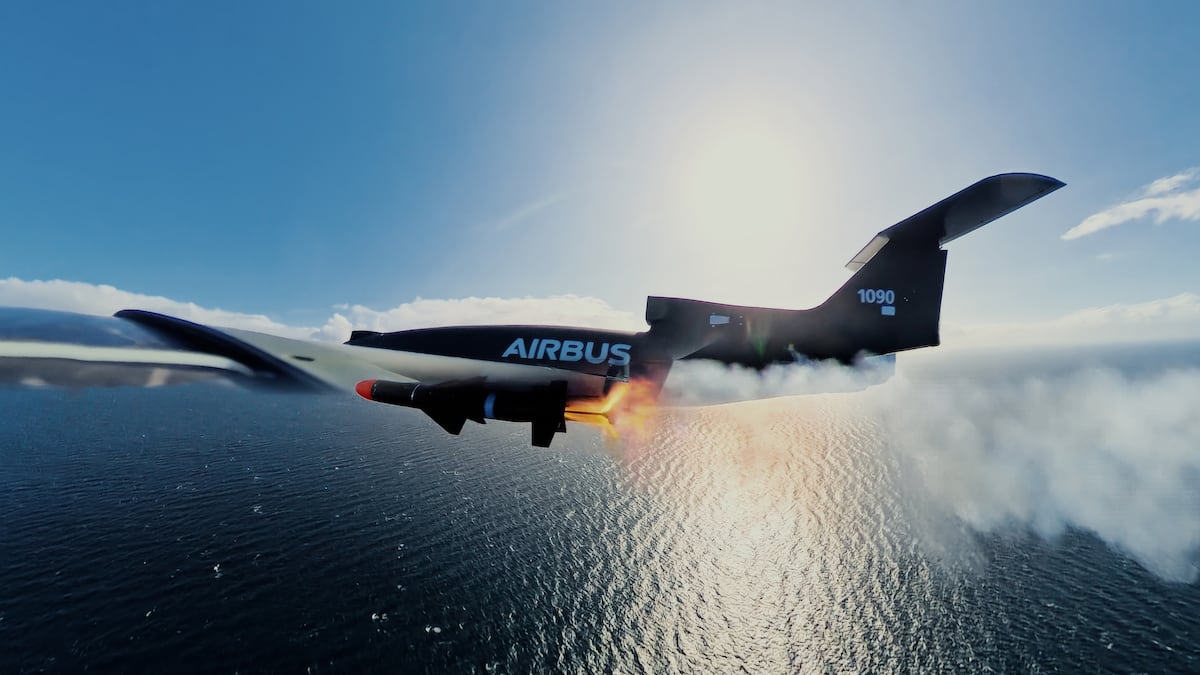
Airbus has recently conducted test flights of its innovative jet-powered interceptor, the Bird of Prey, in partnership with defense startup Frankenburg Technologies. This development targets the escalating threat posed by one-way attack drones, characterized by their cost-effectiveness and simplicity. The companies position this solution as a practical approach for modern defense needs.
Demonstration Flight Details
The initial demonstration flight occurred in a military training area in northern Germany under conditions that mimic real-world engagement scenarios. The Bird of Prey successfully executed autonomous operations to search, detect, and classify a medium-sized one-way attack drone. Upon identification, it effectively engaged the target using Frankenburg’s Mark I air-to-air missile.
Contextual Challenges in Contemporary Warfare
The ongoing conflict in Ukraine and other confrontations in the Middle East have highlighted the urgent need for effective defenses against low-cost aerial munitions, such as Iran’s Shahed drones. These platforms can often be deployed at a fraction of the cost of traditional interceptors, placing significant financial strain on Western militaries and prompting a search for more affordable countermeasures.
- Strategic Priorities:
- The priority of addressing the threat of kamikaze drones has emerged as a tactical imperative.
- Comments from Mike Schoellhorn, CEO of Airbus Defence and Space, reaffirm the pressing need for effective, economical solutions to bridge capability gaps in modern asymmetric warfare.
Technical Specifications and Capabilities
The Bird of Prey interceptor is derived from the Airbus Do-DT25 target drone and boasts significant performance metrics:
- Specifications:
- Maximum speed: 300 knots (approximately 555 kilometers per hour)
- Wingspan: 2.5 meters (8.2 feet)
- Maximum takeoff weight: 160 kilograms
The prototype employed four of Frankenburg’s Mark I missiles during testing, while the final operational version is designed to accommodate up to eight missiles.
Economic Viability and Operational Efficiency
The interceptor-drone duo represents a paradigm shift in cost-effective interception capabilities. Key advantages include:
- Reusability: Each interceptor can conduct multiple engagements.
- Cost Reduction: An “order-of-magnitude reduction in cost per intercept” has been realized, enhancing the feasibility of large-scale deployments.
Frankenburg asserts that the integration process of its missiles onto the Airbus platform was executed in a rapid timeframe of just nine months.
Capabilities of the Frankenburg Mark I Missile
The Mark I missile is a significant stride in guided interception technology. Its specifications include:
- Performance:
- Engagement range: Up to 1.5 kilometers (0.9 mile)
- Length: 65 centimeters
- Weight: Less than 2 kilograms, making it the lightest guided interceptor to date
- Warhead: Equipped with fragmentation capability
Future Developments
Airbus and Frankenburg are planning additional test flights in 2026, which will incorporate live warheads to further operationalize the system and showcase its potential to prospective clients. The Bird of Prey interceptor is designed to integrate seamlessly into NATO’s air defense frameworks, leveraging Airbus’s advanced battle-management systems.
Conclusion
The Bird of Prey interceptor signifies a critical advancement in air defense technology, effectively addressing the modern threat landscape posed by low-cost aerial systems. As military dynamics evolve, initiatives such as this will play a pivotal role in shaping future defense strategies and operational capabilities.