
Air Force Expands Engine Development for Next-Gen Autonomous Platforms
The U.S. Air Force is diversifying its propulsion options for next-generation unmanned vehicles, awarding contracts to a quartet of companies to advance the development of engines tailored for its Collaborative Combat Aircraft (CCA) and other Autonomous Collaborative Platforms (ACP). This strategic initiative aims to enhance operational flexibility through varied power solutions as the service looks towards aerial warfare’s future.
Contracts Awarded to Diverse Manufacturers
The Air Force’s recent contracts have been distributed among:
- Beehive Industries
- Honeywell
- Pratt & Whitney
- A joint venture of GE Aerospace and Kratos
This multi-vendor strategy is pivotal in ensuring the Air Force’s capability to harness a spectrum of propulsion technologies designed to meet the demands of an evolving fleet of autonomous air platforms. According to an Air Force spokesperson, fostering competition among multiple suppliers will “mature engine designs in support of conceptual frameworks for CCA Increment 2 and other ACP types.”
Emphasis on Lower-Thrust Solutions
During its initial phase of the CCA program, the Air Force primarily relied on off-the-shelf engine solutions. However, as Air Force officials emphasize, there’s a pressing need for innovative engine designs that cater to lower thrust requirements. This investment is crucial for unlocking a broader array of future drone capabilities and enhancing operational versatility.
Col. Timothy Helfrich, head of the Air Force’s Agile Development Office, noted, “We identified a gap in smaller engine capabilities, prompting us to allocate resources toward developing viable lower-thrust alternatives.” This approach is aligned with program schedules and aims to mitigate operational challenges by integrating readily available, low-risk propulsion systems.
Engineering Goals and Design Innovations
The awarded contracts focus on early developmental stages, which encompass both initial design and preliminary design review options. This phase is instrumental in assessing the potential of various technologies before progressing to the more resource-intensive stages of prototype construction and testing. Key objectives include:
- Affordability: Developing engines that do not impose additional financial burdens.
- Performance: Ensuring high-performance metrics to enhance mission effectiveness.
- Scalability: Designing engines capable of being produced in large quantities for rapid deployment.
Notable Developments from Awarded Companies
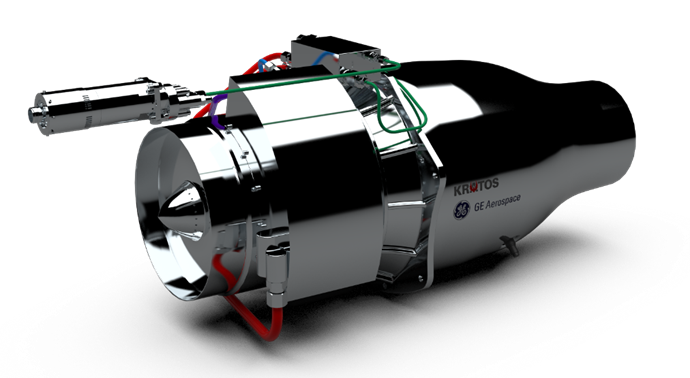
- GE Aerospace and Kratos have teamed up to advance the GEK1500 engine, characterized by its 1,500-pound thrust output. The contract’s estimated value is $12.4 million.
- Honeywell is progressing on its Skyshot 1600 engine, which boasts a thrust capacity of up to 2,800 pounds, although financial specifics remain undisclosed.
- Beehive Industries and Pratt & Whitney have yet to provide additional insights or statements on their respective engagements.
This design phase serves as an essential groundwork for the future of military air operations, offering a clearer representation of what advancements in this sector can achieve.
Future Directions for CCA Initiatives
Following this latest round of awards, the Air Force is poised to streamline its approach for CCA Increment 2, having previously enlisted nine companies for early design work in preparation for upcoming production contracts. The extent to which the Air Force will refine its pool of vendors remains to be seen, as officials continue to assess existing concepts ranging from economical to more sophisticated designs.
In conclusion, the Air Force’s recent propulsion contracts signify a decisive step toward creating a robust framework for its future autonomous air platforms. By fostering innovation in engine design, the service not only enhances its operational capabilities but also reinforces its commitment to maintaining a technological edge in modern aerial warfare.