U.S. Navy’s Rescue Operations: A Case Study in Efficiency and Coordination
Overview of the Incident
On December 3rd, a U.S. Navy search-and-rescue (SAR) unit, designated as the “Dust Devils,” successfully executed a critical mission following the crash of an F-16 fighter jet in Southern California. The pilot, who ejected safely prior to the aircraft’s impact, was engaged in a training flight with the Air Force’s Thunderbirds demonstration squadron near Trona, close to the Naval Air Weapons Station at China Lake.
Timeline and Response
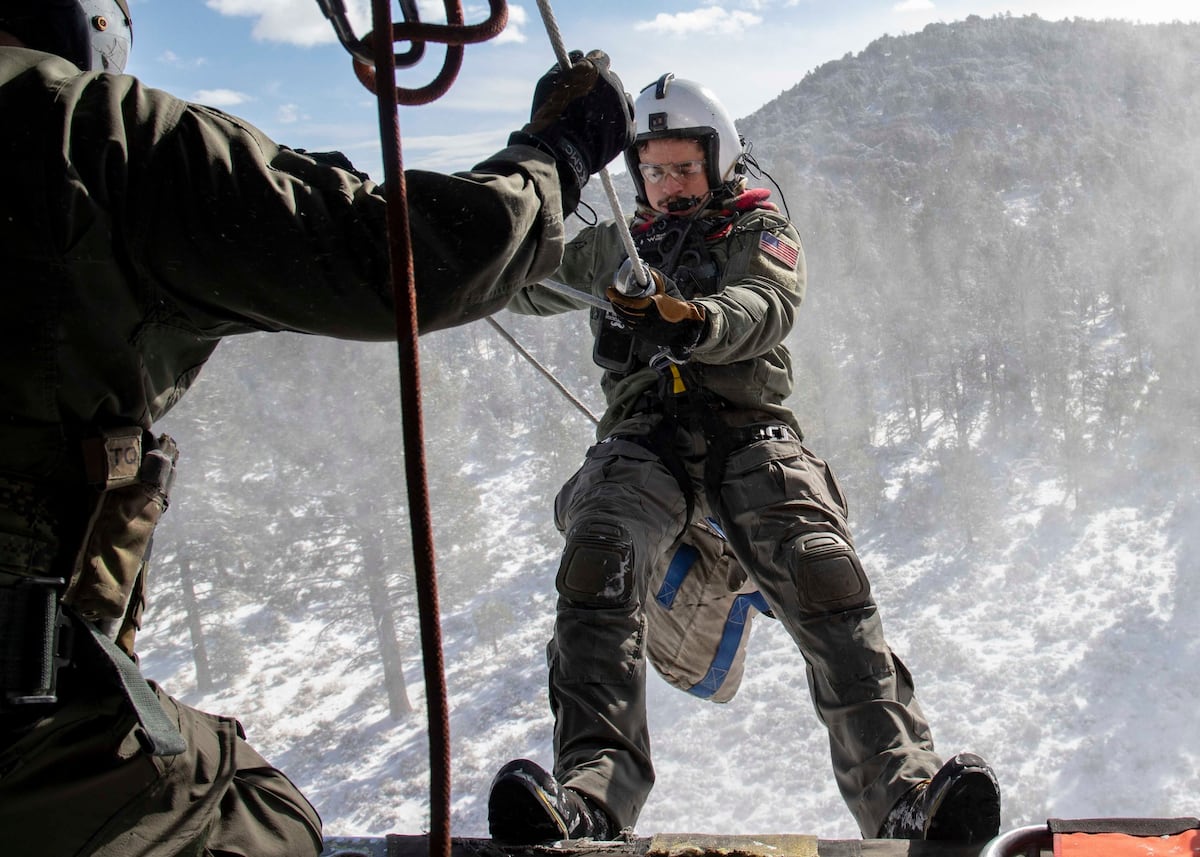
Upon notification of the incident, the Dust Devils team, part of Air Test and Evaluation Squadron (VX) 31, arrived at the crash site approximately 30 minutes post-event. Their swift deployment underscores the importance of readiness and rapid response in emergency situations.
Key Operational Actions:
- Arrival: The rescue team landed roughly 75 yards from a pre-positioned emergency medical services unit.
- Rapid Assessment: SAR medical technicians immediately began evaluating the pilot’s condition, cognizant of the potential for severe injuries resulting from high-impact forces experienced during ejection.
Medical Care During Transport
With an aim to stabilize the pilot, the Dust Devils facilitated transport to the University Medical Center in Las Vegas, Nevada. This phase of the operation was complicated by challenges such as:
- Cold Temperatures: These can exacerbate medical conditions, necessitating careful management of the patient’s environment.
- Aerial Vibrations: Such disturbances can complicate the provision of medical assistance, particularly during critical moments.
Despite these hurdles, the team maintained ongoing medical support to ensure the pilot’s condition remained stable throughout the flight.
Transition of Care
Upon their arrival at the Las Vegas facility, the Dust Devils transferred care to the emergency department personnel, riding in the ambulance to ensure seamless continuity of treatment.
Points of Emphasis:
- Team Training: Hospital Corpsman 1st Class Brian Romero emphasized that the unit’s preparedness stems from rigorous training and exhaustive planning inherent in SAR operations.
- Collaborative Efforts: Romero acknowledged the crucial contributions of San Bernardino fire officials and the Thunderbirds, highlighting the effectiveness of inter-agency teamwork in emergency management.
Conclusion on Operations
The pilot’s journey from ejection to hospital care illustrates the critical role that trained SAR units play in military operations. He sustained non-life-threatening injuries, and investigations into the circumstances surrounding the crash are ongoing. The cohesive efforts of all parties involved serve as a testament to the strategic imperative of readiness and collaboration within defense operations.
In summary, the Dust Devils’ response exemplifies the Navy’s commitment to rapid medical support and operational excellence, thereby ensuring the safety of personnel during training missions. Such incidents provide valuable insights for enhancing future responses and refining protocols in the realm of military aviation safety.