

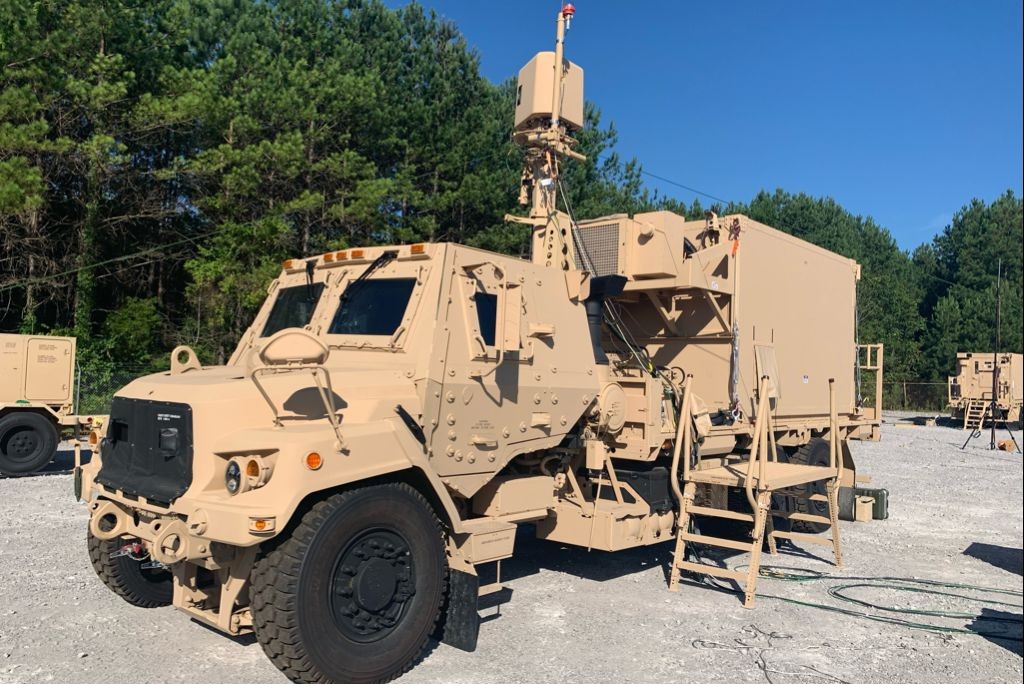
IBCS Flight Test Enhances U.S. Army Air Defense Capabilities
Date: December 11, 2025
Location: Huntsville, Alabama
In October 2025, the Integrated Battle Command System (IBCS), developed by Northrop Grumman Corporation, successfully executed a critical flight test at White Sands Missile Range, marking an important step in the Follow-on Operational Test & Evaluation (FOT&E). This assessment aims to evaluate IBCS’s operational effectiveness in varied tactical conditions.
Test Highlights
During this comprehensive flight test, U.S. Army Air Defenders employed IBCS in simulated real-world scenarios, effectively identifying and intercepting multiple targets using various missiles. The successful engagement of two surrogate cruise missile targets underscores IBCS’s proficiency in neutralizing realistic threats and its capacity to enhance collaborative operations, particularly as it integrated seamlessly with U.S. Navy units.
Key Insights from the FOT&E
The FOT&E initiative is focused on validating IBCS’s capability to counter emerging threats and fulfill current operational objectives. Findings from this operational flight test will significantly influence future IBCS enhancements and its deployment across the Army. The system’s modular and open systems architecture is designed to ensure adaptability in response to evolving threats and requirements.
Production Advancements
Northrop Grumman is currently manufacturing IBCS at a state-of-the-art facility in Madison, Alabama. This modern production center is set to double the company’s manufacturing output in Huntsville, enabling a scalable response to the increasing demand for integrated fire control and command solutions both domestically and internationally.
Expert Commentary
Jeremy Knupp, Vice President for Global Command and Control Solutions at Northrop Grumman, emphasized the system’s exceptional performance during the soldier-led FOT&E flight test, stating, “IBCS continues to demonstrate outstanding capabilities by neutralizing complex threats. It reflects our commitment to integrating advanced technologies and harmonizing systems across diverse services, sources, and operational domains.”
Overview of IBCS Capabilities
The Integrated Battle Command System represents a groundbreaking leap in fire control and battle management technology. It effectively unifies current and future systems, irrespective of their origin, enhancing situational awareness through the fusion of sensor data into a cohesive and actionable battlespace perspective.
The network-enabled, modular, and scalable architecture of IBCS allows it to evolve alongside shifting operational landscapes, providing warfighters with critical time to evaluate and address threats. This foundation is pivotal for facilitating joint and coalition multi-domain operations.
Currently, IBCS is in the production phase and is poised to be integrated into the U.S. Army’s air and missile defense modernization program. Northrop Grumman secured a five-year contract exceeding $1 billion from the U.S. Army in December 2021 for both low-rate initial production and full-rate production of IBCS.
Conclusion
The continued development and testing of the Integrated Battle Command System exemplify a significant advancement in U.S. Army capabilities, providing a versatile solution that enhances operational readiness and joint mission effectiveness in the 21st-century multidomain battlefield.