
Strengthening European Defense Industry for Modern Conflict
Navigating the Defense Manufacturing Challenge
European governments face a significant dilemma as they strive to prepare their defense industries for large-scale production of drones and other military equipment, all while avoiding the accumulation of outdated stockpiles. This challenge was highlighted by Francois Arbault, the European Commission’s director for defense industry, during the Forum Innovation Défense held in Paris.
“What strategies can we implement to ensure we are war-ready, without resorting to stockpiling obsolete equipment?” Arbault queried. The pressing issue remains how to achieve a state of preparedness in a peacetime context.
Divergent Mindsets in Response to Conflict
European leaders have been hesitant to fully embrace the “war economy” concept advocated by French President Emmanuel Macron after the onset of the Ukraine conflict in 2022. While NATO members across Europe have increased defense budgets, there is a lack of an integrated economic strategy directed towards war readiness, including France.
Jérôme Cerisier, CEO of the French night-vision firm Exosens, emphasized the contrast between Ukraine’s urgent needs for survival and Europe’s comparatively less immediate pressures. “Ukraine is compelled to innovate rapidly under duress,” he stated, contrasting with Europe’s slower response time.
The Importance of Adaptive Preparedness
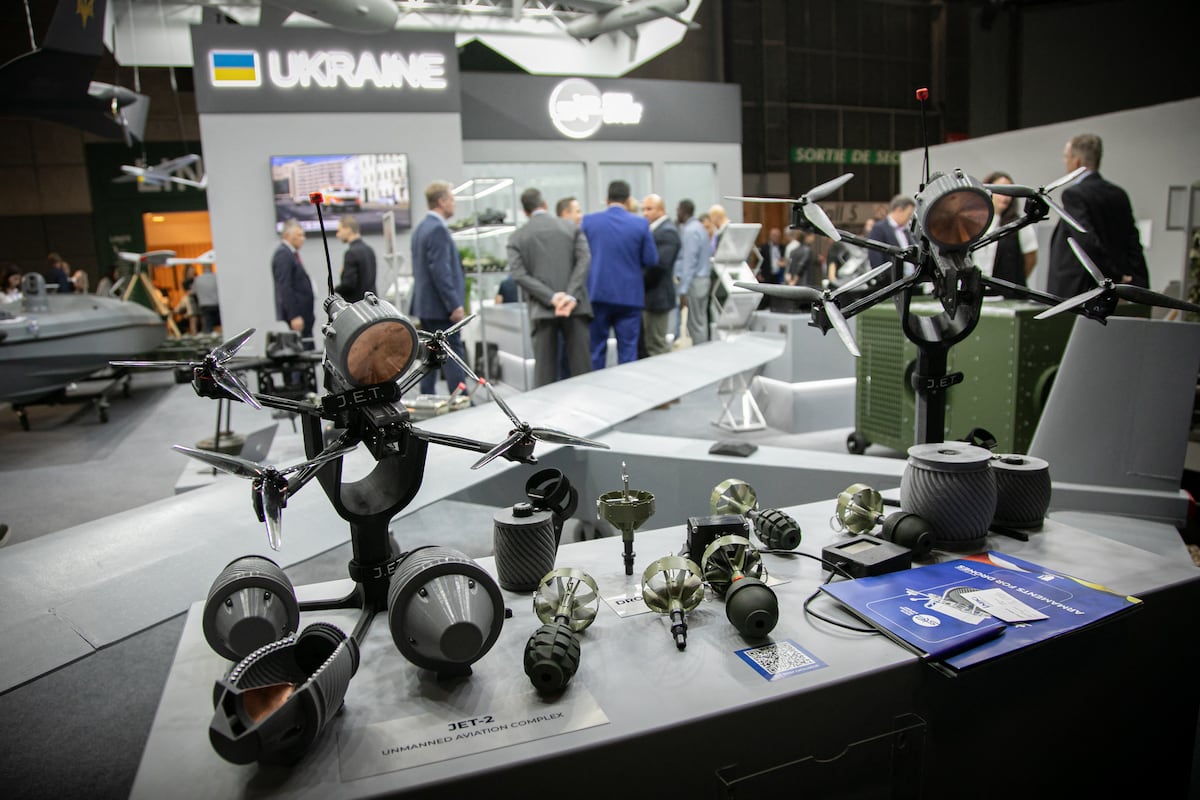
Arbault stressed that readiness should not equate to stockpiling outdated drones, as technological advancements could render them obsolete when an actual conflict occurs. The drone development cycle in Ukraine reportedly spans just eight to ten weeks, a stark contrast to the slower timelines typical in Western Europe.
To mitigate stockpiling issues, Marie Nicod, general partner at Jolt Capital, proposed the creation of versatile industrial and technological components. The intention is to formulate various systems without immobilizing capital in inflexible inventories.
Proactive Industry Scaling Strategies
Exosens is gradually enhancing its production capabilities to ensure swift reactions if required, a strategy advocated by Cerisier who urged proactive engagement in war economy discussions. Future demand visibility, facilitated by France’s military budget programming, will be essential for justifying investments in increased capacity.
Sylvain Rousseau, CEO of Aresia, stressed the necessity of training simulations to identify production bottlenecks and vulnerabilities. “The barrier to scaling up may be as simple as a single machine or technology,” he indicated.
European Initiatives Toward Defense Readiness
In March 2024, the EU introduced its initial defense-industrial strategy, emphasizing “defense industrial readiness.” Thierry Breton, former European Commissioner, articulated the need for defense industries to transition into a “war economy mode,” marking a crucial step in this direction.
Further, Dutch Defense Minister Ruben Brekelmans highlighted that current conflicts hinge on industrial capacity, underscoring the defense sector as integral to national security. Sweden has also articulated a new defense-industry strategy aimed at enhancing production capabilities.
The Unique Context of European Defense
Olivier Lecointe, head of industrial policy at France’s Directorate General for Armament, acknowledged the complexities of comparing Europe’s military readiness with Russia’s ongoing conflict. While increasing production capacity remains vital, Lecointe noted the impracticality of amassing stocks that may exceed demand unpredictably.
“A targeted approach to ensuring production capability is essential. Transitioning from low to high-volume manufacturing cannot occur instantaneously; it necessitates investment in facilities, machinery, and workforce,” he explained.
Challenges Ahead: Economic and Operational Considerations
The European defense sector is hampered by outdated machinery, though modernization could enhance production rates significantly. Lecointe warned that investing in production capacity hinges on sustained demand— a risk that could lead to wasted resources if orders fall short.
Moreover, this shift threatens to elevate production costs substantially, leading to questions about funding sources for these preparations amid uncertain demand.
Exploring Collaboration and Innovation
Potential collaborations with automotive suppliers could offer avenues to scale arms manufacturing, yet the differing economic models complicate this alignment. Lecointe noted that while automotive volumes reach tens of thousands annually, defense production scales typically range in the dozens.
The demand for rapid adaptation in testing new military equipment—similar to Ukraine’s battlefield feedback mechanisms—challenges traditional programming models. Lecointe called for a revitalized dialogue between armed forces and manufacturers to facilitate timely innovation.
Adapting to High-Intensity Warfare Protocols
As Europe contemplates high-intensity conflict scenarios, Lecointe emphasized the importance of revising how military objectives are pursued. The need for agility in production and feedback cycles demands that industry processes adapt to modern warfare requirements.
“We must move beyond traditional paradigms; preparation for future conflicts requires a radical shift in how we engage with the defense sector,” he stated, alluding to a need for dynamic operational strategies that resonate with contemporary challenges.
Through integrated adaptation and collaboration, Europe’s defense industry can evolve to meet future threats, ensuring robust preparedness in an increasingly uncertain global environment.