
Assessing NATO’s Strategic Partnership with Ukraine: Insights from Hedgehog 2025
Introduction to Hedgehog 2025
In May, NATO conducted its significant exercise, Hedgehog 2025, in the Baltics, where it enlisted a contingent of ten Ukrainian military personnel as an opposing force. The Ukrainians notably demonstrated their tactical prowess by simulating the destruction of 17 armored vehicles and executing 30 strikes in mere hours. This exercise concluded with an observing commander exclaiming, “We are finished,” signifying a stark warning regarding NATO’s preparedness for contemporary warfare—particularly concerning the absence of U.S. forces during the drill.
Reframing the Western Perspective on Ukraine
The Western dialogue surrounding support for Ukraine often paints NATO’s assistance as a benevolent act towards a struggling ally. This framing, however, overlooks a critical reality: Ukraine has emerged as a vital strategic asset for the alliance. Ukrainian expertise has already started yielding dividends; for instance, President Zelenskyy announced the deployment of Ukrainian specialists to the Middle East to tackle Iranian drone threats, offering U.S. defense solutions to an otherwise costly dilemma. The flow of military aid that once exclusively benefited Ukraine is now on the verge of being reciprocated.
A Call for Strategic Reevaluation
This analysis does not necessarily advocate for Ukraine’s immediate accession to NATO. Instead, it emphasizes that NATO member states, particularly the United States, must recognize the strategic priority that Ukraine represents. There is an urgent need for NATO to establish mutual training programs that harness the combat experience of Ukrainian forces. Future discussions surrounding Ukraine’s membership should be recalibrated to account for its proven military capabilities.
Experiencing the Ground Reality in Ukraine
Drawing from nine months of experience working in Ukraine with the United Nations, I encountered a profound dissonance between how Ukraine was portrayed in U.S. policy circles and the realities observed on the front lines. Conversations with seasoned soldiers returning from the Donbas exposed an unsettling truth: the nature of their warfare differed markedly from conventional insights gleaned from past operations in the Global War on Terror.
During a visit to the U.S., discussions on drone integration revealed that U.S. forces were lagging significantly behind the rapidly evolving tactics employed by Ukrainian soldiers. Having personally experienced air raid alerts and drone strikes, it became evident that Ukrainians were not merely theorizing about modern warfare; they were actively engaged in it.
The Ukrainian Edge in Innovation and Production
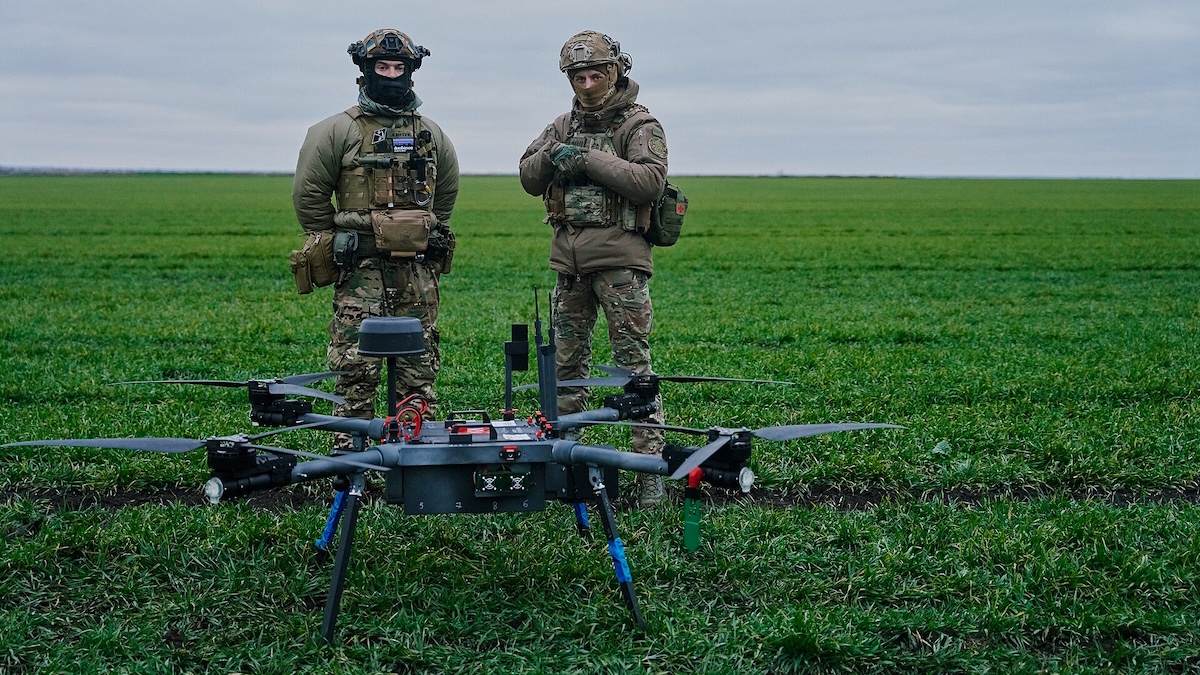
Hedgehog 2025 highlighted a fundamental disparity: Ukraine has spent several years developing a more nimble warfare capability compared to NATO’s traditional forces. Notably, Ukraine is now producing approximately 4 million drones annually. In a significant move, two Ukrainian manufacturers were selected for the U.S. Department of Defense’s “Unleashing American Drone Dominance” initiative, showcasing the critical innovations being employed by Ukraine.
Key Differentiators in Ukrainian Warfare Strategies
-
Unit-Level Flexibility: Ukraine has embedded drone production within its combat units, employing technologies such as 3D printing and localized adaptations to battlefield needs. This rapid innovation cycle has led to modifications based on frontline feedback—something NATO’s centralized procurement structures cannot replicate.
-
AI-Enabled Battle Management: The Delta platform, crafted by volunteers, synthesizes satellite imagery, electronic warfare, and drone reconnaissance into a cohesive real-time operational overview. The agility of Delta stands in stark contrast to NATO’s more rigid command systems, underscoring the successes of a bottom-up approach in warfare.
These disparities illuminate deeper issues regarding how NATO must adapt to the exigencies of modern conflict. While NATO’s structures offer certain benefits in peacetime, they may inhibit the kind of rapid adaptation that is essential in wartime.
Ukrainian Frontline Insights and Adaptation
As Ukraine’s conflict with Russia continues, it serves as a global testing ground for cutting-edge military technologies. Initiatives like Fourth Law’s AI vision module for drones have markedly elevated operational success rates. The OCHI initiative has collected invaluable drone footage, allowing for retraining of targeting systems in a manner that underscores the importance of data-driven warfare.
Ukraine’s initiatives signal the need for defense manufacturers to engage in co-development opportunities within combat zones, fostering a spirit of innovation that contrasts sharply with the bureaucratic processes often found within NATO.
Institutional Adaptations and Civil-Military Cooperation
Ukraine’s military reforms extend beyond technological advancements. There has been a notable emphasis on improving civil-military coordination in wartime settings. For example, during the Black Sea Grain Initiative, Ukrainian representatives effectively navigated complex negotiations with Russian counterparts, demonstrating a level of strategic sophistication and adaptability that is invaluable in crisis situations.
Furthermore, Ukraine has continually reformed its military and civil structures since 2014, despite facing Soviet-era legacies. Recent combat experience has evidenced that change is possible, fostering an environment conducive to innovation and responsiveness.
Redefining Strategic Partnerships for Enhanced Security
Ironically, while Ukraine has long solicited NATO membership, the alliance has frequently deferred engagement due to concerns regarding escalation and regional stability. Recent discussions indicated a willingness from President Zelenskyy to forgo NATO membership in exchange for robust security guarantees from the U.S., yet NATO’s failure to capitalize on Ukraine’s military strengths is a misstep for European security.
The relationship between NATO and Ukraine offers mutual advantages. While NATO brings unique capabilities to the table—such as nuclear deterrence and superior intelligence—Ukraine’s frontline experience and innovative strategies could significantly bolster NATO’s deterrence posture.
Policy Recommendations
-
Reverse Training Initiatives: Ukrainian military instructors should embed with NATO forces to share cutting-edge tactics and operational frameworks.
-
Enhancing U.S. Engagement: The U.S. should re-establish its involvement in NATO exercises to directly address capability gaps exposed during recent drills.
-
Reassessing Security Frameworks: NATO should consider how it defines its relationship with Ukraine, focusing on the strategic benefits Ukraine offers rather than viewing it solely as a beneficiary of aid.
In this transitional phase, strategic clarity regarding Ukraine’s role within any future security architecture is imperative to prevent further emboldenment of adversaries and better safeguard collective interests. Recognizing Ukraine as a vital partner rather than a peripheral entity will project a unified front of resilience and preparedness for future conflicts.
Conclusion: A Call to Action for NATO
The ten Ukrainians who neutralized NATO battalions in Estonia epitomize years of hard-won experience in modern warfare. Their capability cannot be replicated through training alone; it arises from a crucible of continuous conflict and reform. NATO must reorient its paradigm regarding Ukraine, acknowledging the immediate need for collaboration in preparation for emerging threats. Recognizing Ukraine as a vital ally will not only enhance NATO’s strategic positioning but also reinforce its collective security framework as Europe faces increasingly complex challenges.